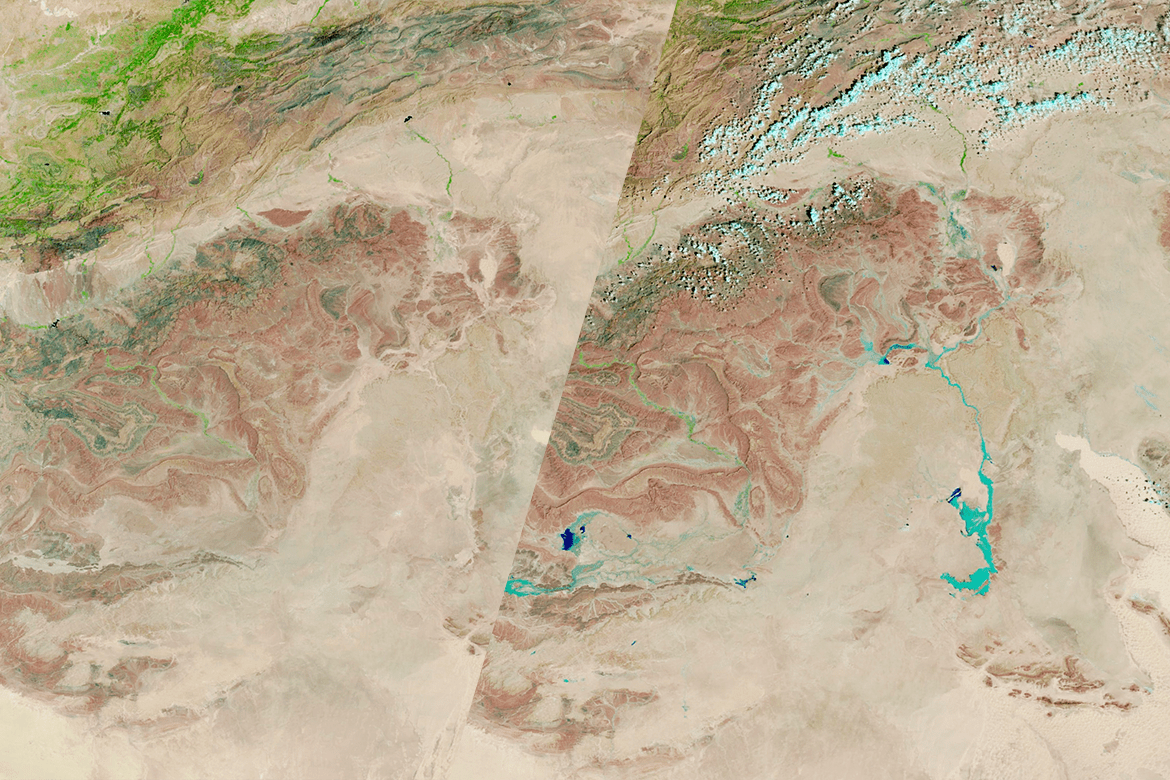
According to ABC, NASA photos show parts of the Sahara Desert, one of the driest places on the planet, turning green with vegetation following heavy rainfall in early September.
Areas of the desert in Morocco, Algeria, Tunisia, and Libya, where rain is infrequent, temporarily developed flora, including shrubs and small trees, after a powerful storm swept through northwest Africa on September 7 and 8.
According to a 2012 study, the Sahara was covered in dense vegetation and lakes between 11,000 and 5,000 years ago.
When it rains, vegetation often sprouts quickly. According to scientists, plants respond immediately when the dry desert soil absorbs significant water. However, in the Sahara, only a few summer rains are typical, driven by the West African monsoon season.
In this instance, initial satellite image analysis shows that rainfall accumulation in these areas exceeds 30 cm, whereas some parts of the Sahara receive much less annually. The intense storm in the Sahara is part of a broader pattern that has increased storms in Northern and Central Africa since mid-July, leading to floods and claiming over 1,000 lives in countries such as Chad, Mali, Nigeria, and Niger.


 What is fyi.news?