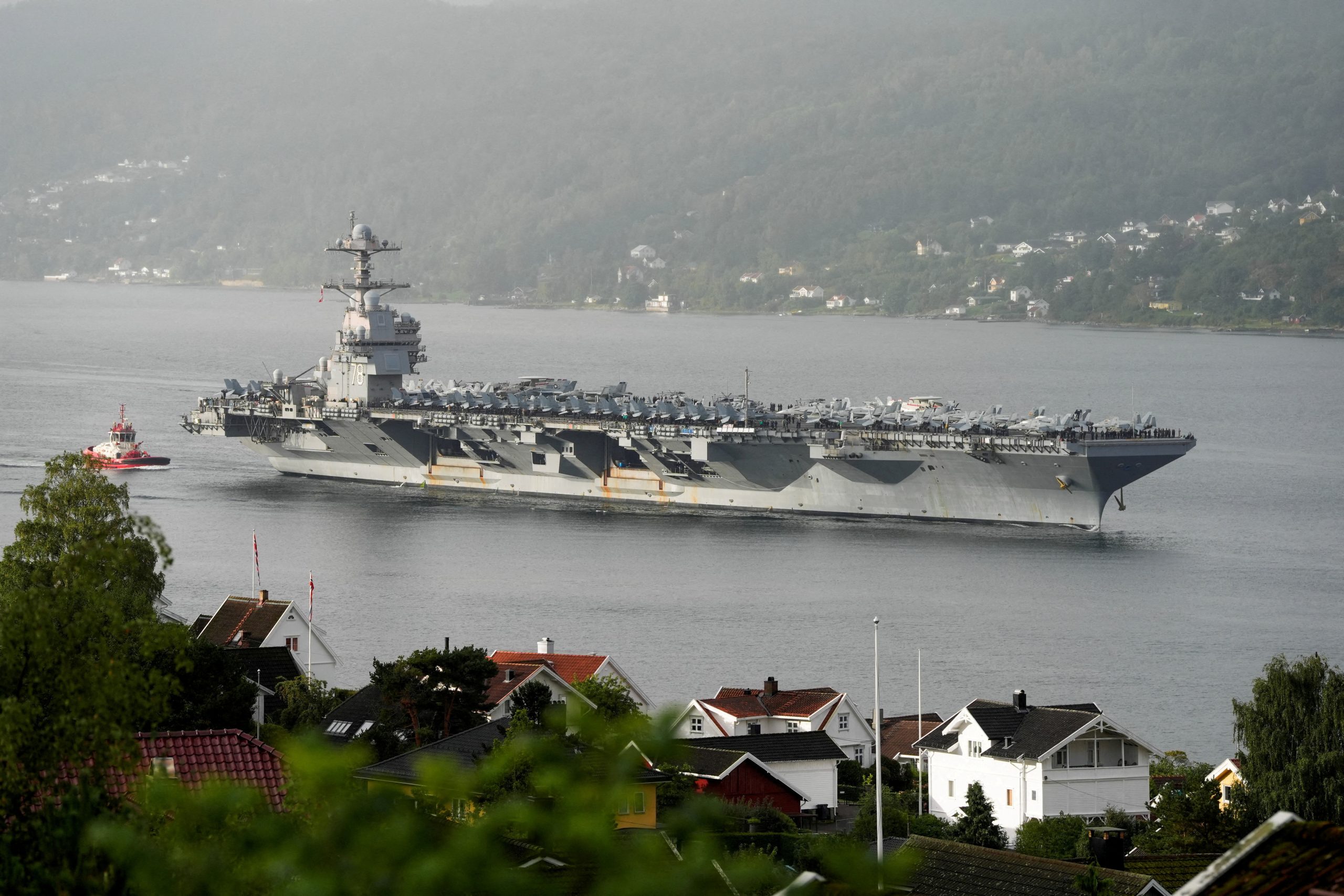
The U.S. aircraft carrier USS Gerald R. Ford, the largest warship in the world, has arrived in the Caribbean, joining other forces already stationed there to form the largest American military presence in the region in decades.
The move comes amid heightened tensions between the United States and Venezuela. So far, the U.S. has carried out 19 attacks on Venezuelan vessels, resulting in 76 deaths, justifying them as part of an effort to dismantle drug trafficking routes from Venezuela to the U.S. The most recent strike took place on Sunday, killing six men aboard two boats, according to U.S. Defense Secretary Pete Hegseth.
Venezuelan President Nicolás Maduro has responded with military drills, accusing the U.S. of “fabricating” a crisis with the aim of toppling his government and seizing control of the country’s oil reserves.
There is “strong evidence” that the attacks constitute unlawful extrajudicial executions (killings carried out by state agents without trial) according to the United Nations.
U.S. President Donald Trump has stated that he does not intend to overthrow the Maduro government, but according to The Wall Street Journal, his statements have sent mixed signals: at times suggesting the possibility of a strike against Venezuela, while also claiming he does not intend to declare war.
The attacks have sparked international backlash, including condemnation from Russia (a Venezuelan ally), Brazil, and even Colombia (a U.S. ally), which has “frozen” its intelligence-sharing cooperation with Washington.
UN High Commissioner for Human Rights Volker Türk said there is “strong evidence” that the deadly U.S. attacks in international waters amount to unlawful extrajudicial executions, that is, killings by state agents such as police or military forces, carried out without trial, judicial decision, or any lawful process.
Sources: The Wall Street Journal, BBC


 What is fyi.news?