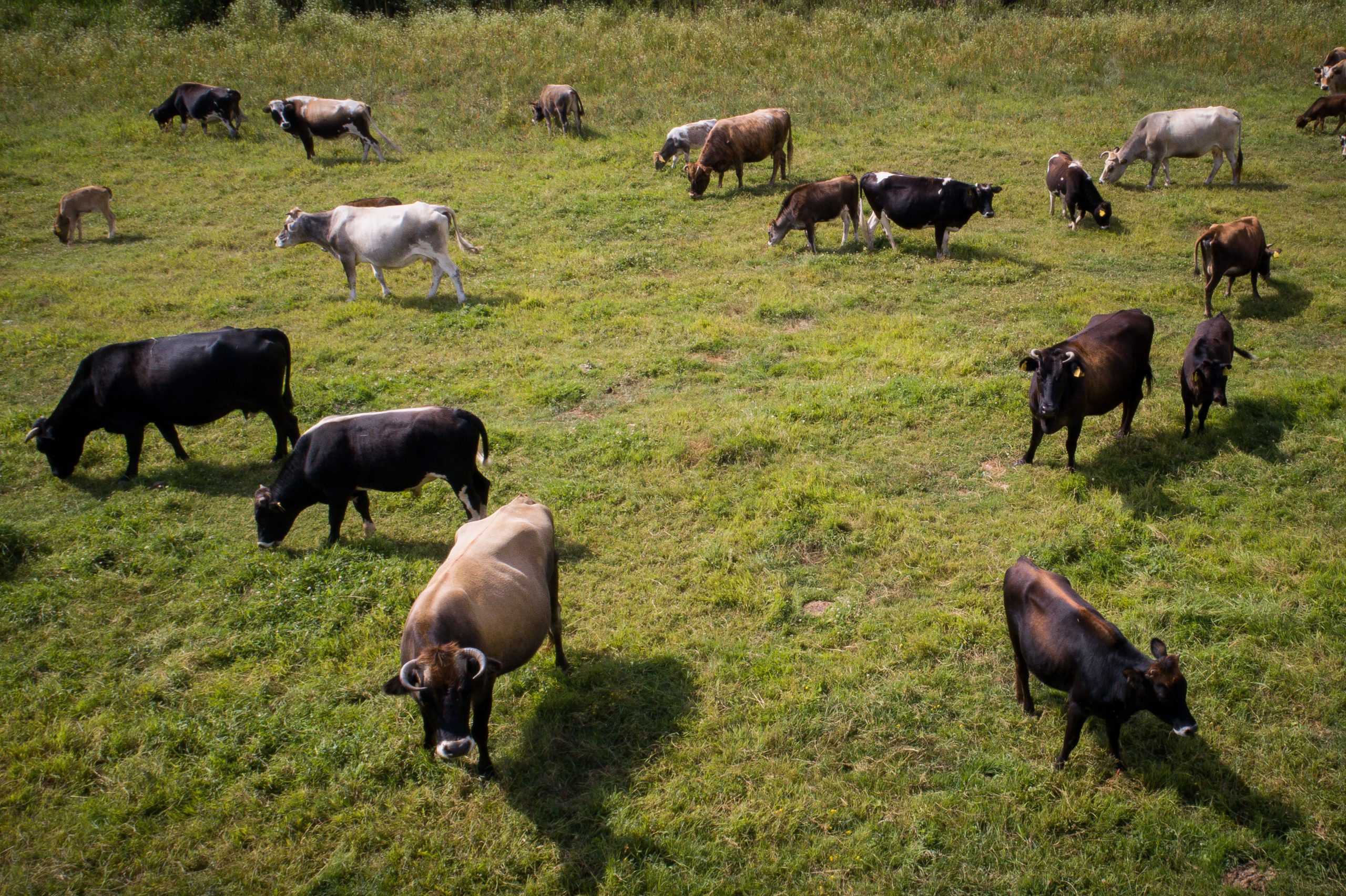
A new Politico report adds to the OPEKEPE (Greece’s agency responsible for managing and paying EU agricultural subsidies) scandal, alleging that Greek livestock farmers declared tens of thousands more animals in 2024 than they actually had.
According to Politico’s analysis of data from the Hellenic Statistical Authority (ELSTAT), EU subsidies were paid in 2024 for tens of thousands more livestock than the available data appear to justify.
Data from the Ministry of Rural Development and Food show that in 2024, Greek authorities paid EU subsidies for around 260,000 suckler cows. Since a cow typically gives birth to about one calf a year, this figure should have resulted in a corresponding increase in the cattle population.
Subsidy figures suggest that the number of cattle should have increased by around 70,000 in 2024, but ELSTAT data show a decrease of around 40,000.
During the same year, around 70,000 cattle were sent for slaughter, which was also covered by subsidy schemes.
Even when losses due to age, disease or reduced productivity are taken into account, the figures do not appear to add up. The Ministry of Rural Development and Food does not publish complete data on these losses.
Livestock industry representatives told Politico that around 20% of the herd is removed each year for these reasons. With a total of around 600,000 cattle, this would amount to roughly 120,000 animals a year. Based on the subsidy data, however, the national herd should theoretically have increased by around 70,000 animals in 2024.
Instead, according to ELSTAT’s annual surveys published last June, the cattle population fell from around 640,000 in 2023 to 600,000 in 2024 and 520,000 in 2025.
Source: Politico


 What is fyi.news?