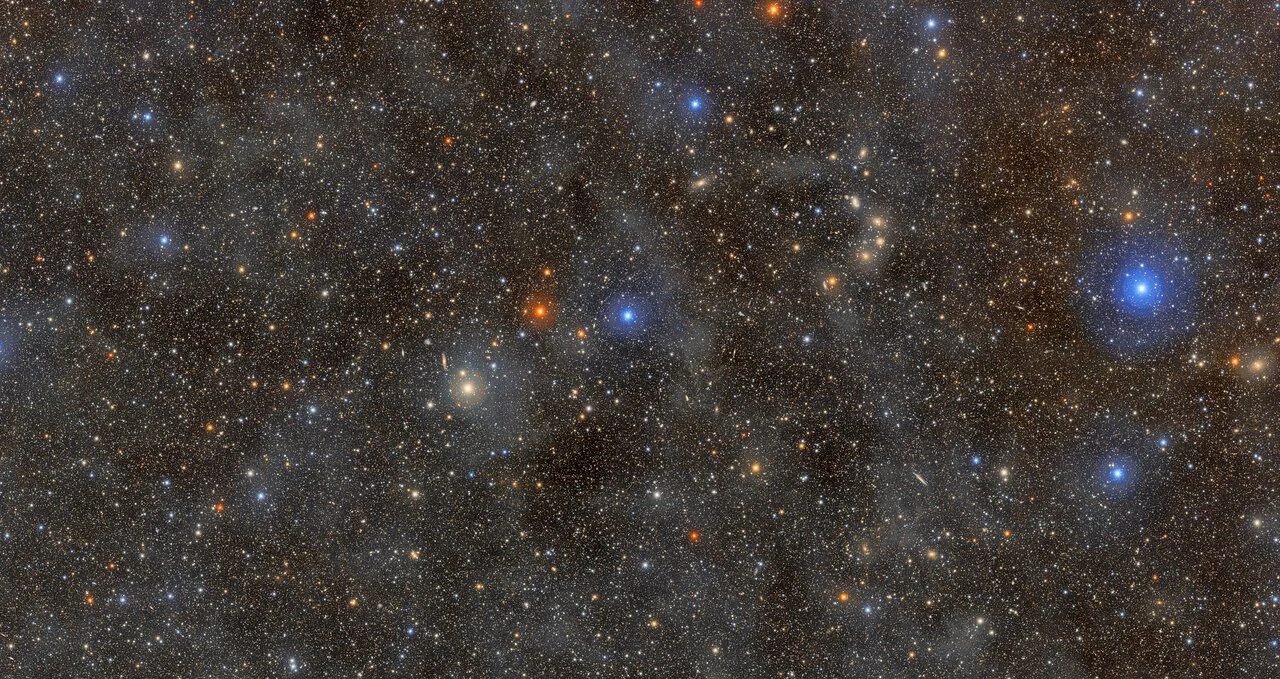
The Vera C. Rubin Observatory in Chile has officially begun its decade-long survey to map the universe, using the largest digital camera ever built. The telescope, installed on a mountaintop in Chile, will observe the southern sky for the next 10 years, capturing hundreds of images every night.
The mission’s goal is to create one of the most detailed maps of the sky to date. Scientists estimate that Rubin’s data will make it possible to record billions of stars in our Milky Way, as well as billions of other galaxies beyond it. Because the telescope will repeatedly photograph the same regions of the sky, researchers will be able to detect faint, changing, or hard-to-observe objects that have so far remained beyond observation.
Vera Rubin was an American astronomer known for her decisive contribution to dark matter research.
The survey is expected to provide new data on how galaxies form and evolve, how matter is distributed throughout the universe, and how its present-day structure took shape over billions of years. At the same time, Rubin’s observations are considered crucial for the study of dark matter and dark energy, two of the biggest open questions in modern astrophysics.
The observatory, funded by the U.S. National Science Foundation and the U.S. Department of Energy, is named after Vera Rubin, the American astronomer known for her decisive contribution to research on dark matter.
Source: Associated Press


 What is fyi.news?