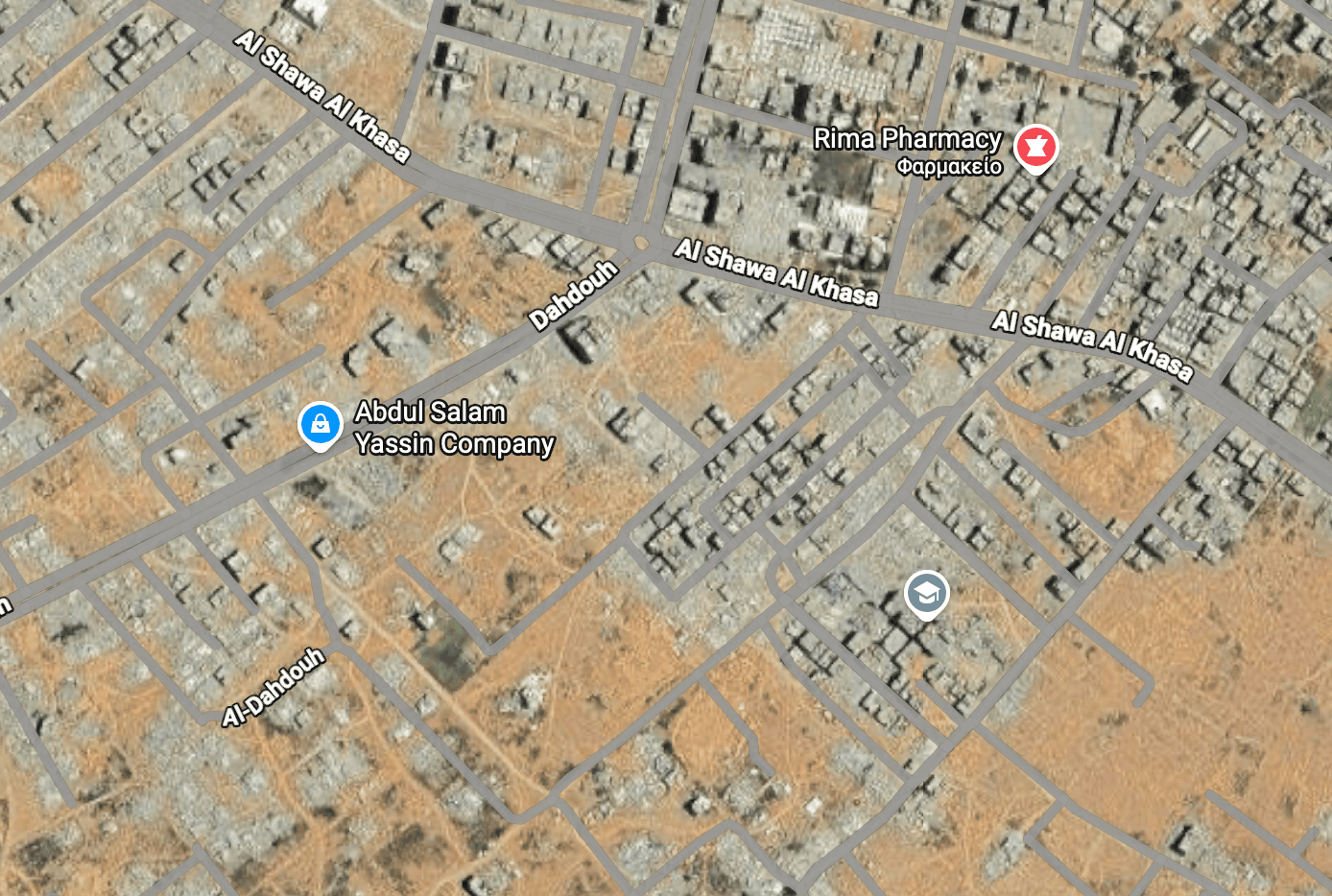
Google Maps satellite images show the extent of the destruction in Gaza after three years of Israeli attacks, including demolished buildings, places of worship and infrastructure.
Vast areas of rubble are visible in southern Gaza, where a large strip of land along the border with Egypt appears to have been cleared by Israeli forces.
Gaza City neighborhoods including Jabalia and Shujaiya are uninhabitable, while cities such as Rafah appear to have been reduced to rubble. Tel al-Sultan has also been flattened.
The amount of rubble in Gaza is estimated at 61 million tonnes, around 20 times the amount generated by all wars worldwide over the past 18 years combined.
Gaza’s once-busy main port is now severely damaged and without fishing boats, while makeshift shelters surround the area. Available open spaces across Gaza City are filled with makeshift structures, tents and huts.
More than 2.1 million displaced people are living in tents and temporary shelters in Gaza, where 200,000 buildings, or 82% of all structures, have been damaged. Since the ceasefire a year ago in October, damaged infrastructure in Gaza has increased by 9%.
“The estimated total amount of rubble in Gaza is 61 million tonnes. That is about 20 times the amount of rubble generated by all wars worldwide over the past 18 years,” Jaco Cilliers, a special representative of the United Nations Development Programme in Palestine, told the Guardian.
Source: The Guardian


 What is fyi.news?