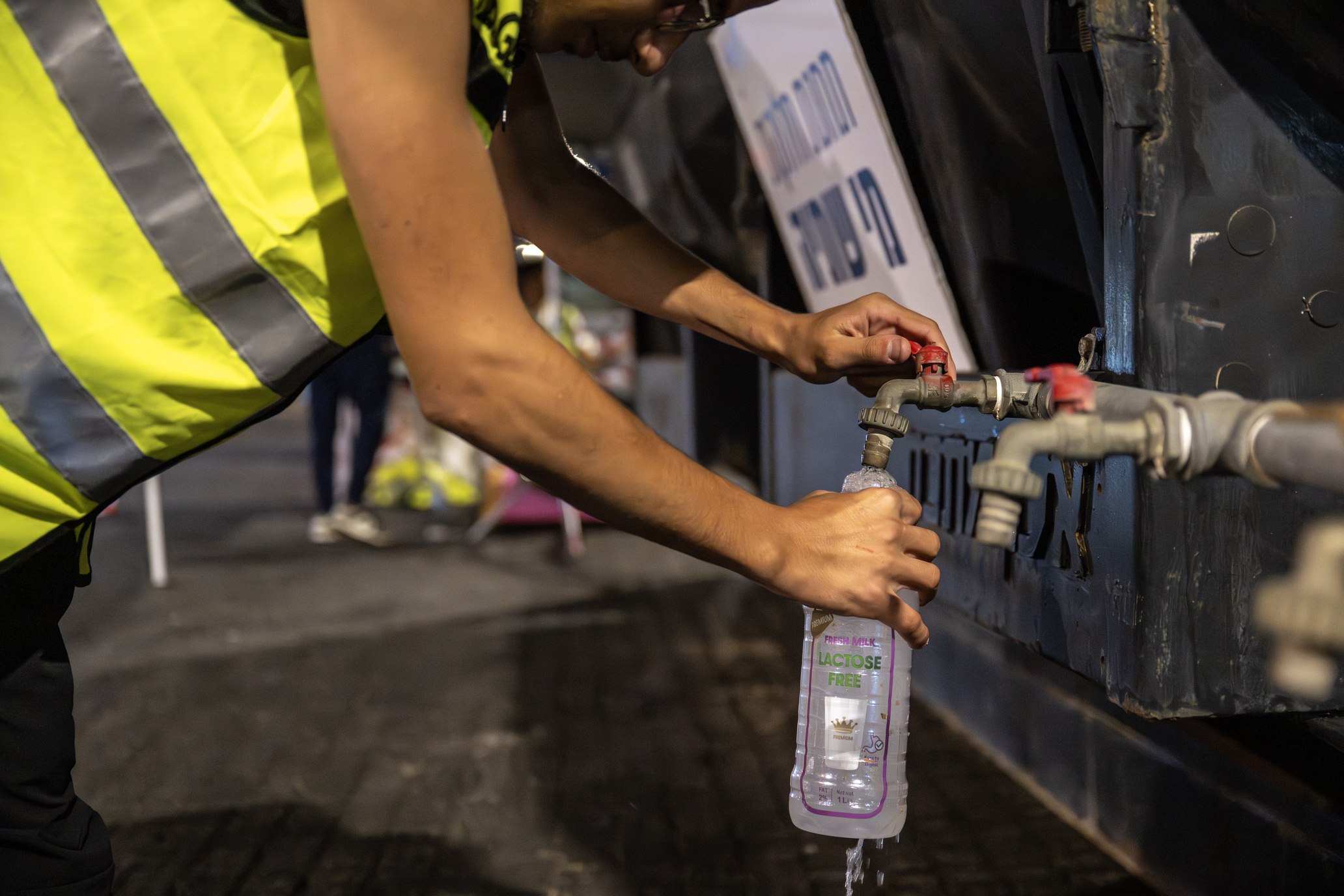
Israel is facing serious drinking water shortages after an unusually widespread microalgae bloom in the Mediterranean clogged filters at five of its six main desalination plants. The plants were shut down for several days and have since been operating at reduced capacity, in a country where desalination is a major source of drinking water.
Scientists and environmental groups have linked the microalgae bloom to large volumes of untreated sewage flowing into the Mediterranean from Gaza. Sewage contains high concentrations of nutrients such as nitrogen and phosphorus, which can promote the growth of microalgae and cyanobacteria.
In Gaza, all five wastewater treatment plants are out of operation, with around 45,000 cubic meters of untreated sewage flowing into the Mediterranean each day. An estimated 15,000 cubic meters of wastewater also leak into the groundwater daily. According to Médecins Sans Frontières, around 90% of Gaza’s water and sanitation infrastructure has been destroyed since 2023.
Many people in Gaza are forced to drink unsafe water, increasing the risk of illnesses such as acute diarrhea.
The crisis is also directly affecting people in Gaza. The coastal aquifer, which supplied much of the territory’s water before the war, has been contaminated by seawater and sewage, while pipelines carrying water from Israel are operating only partially. With distribution networks also damaged, much of the population relies on water trucks, and many people are forced to use unsafe water, increasing the risk of infections and acute diarrhea.
In Israel, authorities have called for reduced water consumption, while water supplies have been cut in the south and farmers have been asked to limit irrigation. Experts say the crisis shows that the environmental and public health consequences of the destruction in Gaza extend beyond its borders and can also affect Israel.
Source:The Guardian


 What is fyi.news?