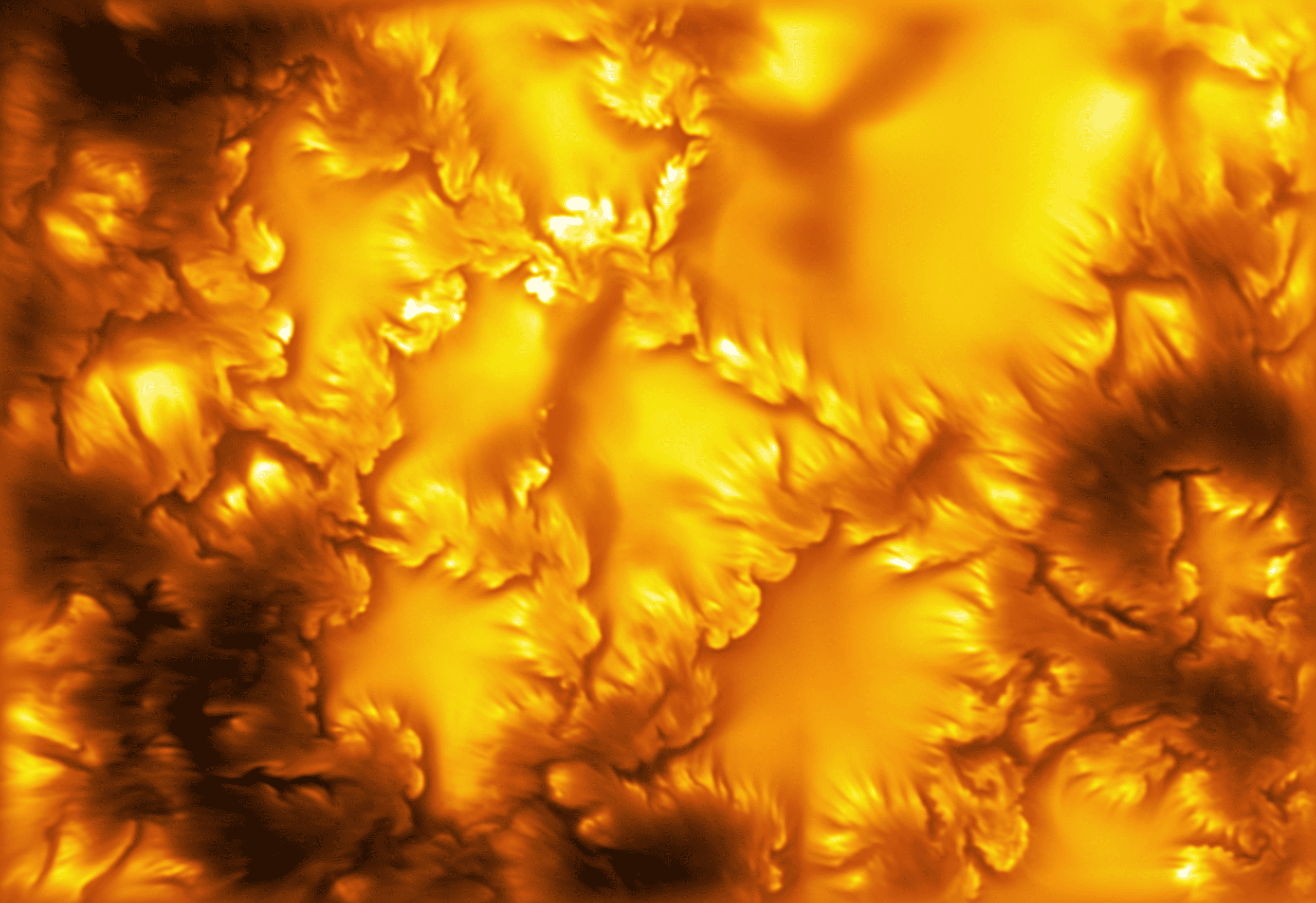
Scientists have captured the Sun’s surface in unprecedented detail using the Inouye Solar Telescope in Hawaii, the world’s most powerful solar telescope.
Its four-metre mirror enabled researchers to resolve features smaller than 20 kilometres (about 12 miles) across—around three times smaller than previously detectable.
The new images reveal intense swirling structures on the Sun’s surface. They form as the movement of hot gases distorts the Sun’s magnetic field, creating vortices that had not previously been observed directly.
According to the study’s authors, the findings mark an important step towards a better understanding of plasma behaviour.
This constant motion is thought to play a key role in storing and releasing magnetic energy, triggering solar flares and other powerful eruptions. These events generate what is known as space weather, which can affect radio communications, GPS systems, satellites and power grids, while increasing astronauts’ exposure to harmful radiation.
According to the study’s authors, the research is an important step towards a better understanding of plasma behaviour and the processes that drive solar activity.
Sources: BBC


 What is fyi.news?