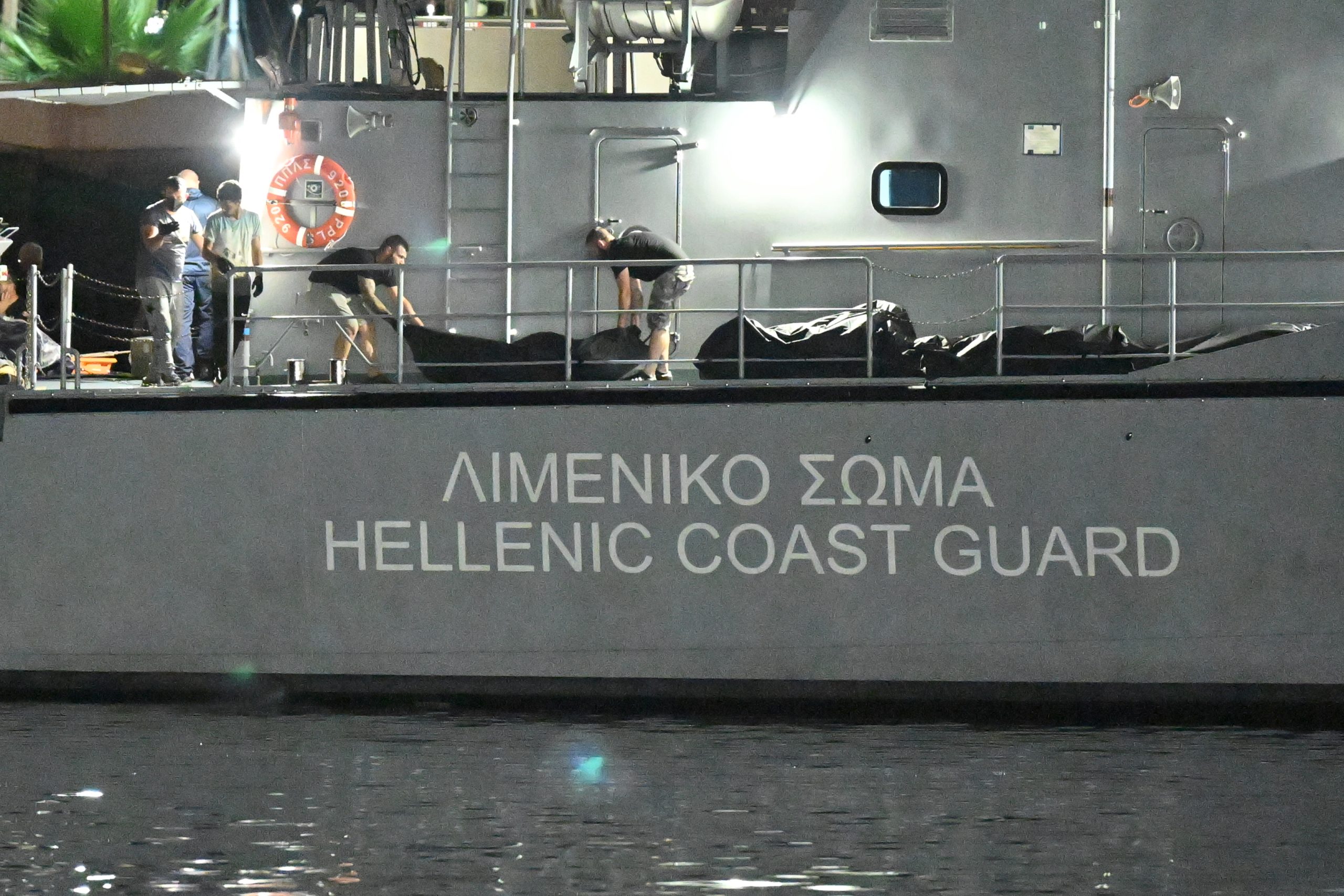
In conversations that were not officially recorded, as well as others that were, Coast Guard officers can be heard directing the refugees aboard the fishing boat, before the Pylos shipwreck, to claim that they did not wish to be rescued in Greece but in Italy, according to a new report by Efymerida ton Sintakton and omniatv.
At the same time, key conversations from the Unified Coordination Center for Search and Rescue (EKSED) are missing from the material the Coast Guard submitted to the Prosecutor of the Naval Court, which is investigating potential criminal responsibility of the officers involved in the shipwreck.
The Coast Guard says the gaps exist because the communication system had failed, and as a result, the conversations were conducted analogically, without the ability to be recorded.
The missing data includes gaps in communications between the EKSED and the patrol boat PPLS-920, which attempted to tow the fishing vessel before it capsized. There is no recording for the critical period before and after the shipwreck, and the patrol boat did not have a functional voyage recording system, i.e., a “black box.” The Coast Guard also stated that the cameras were not working and later claimed they did not store the footage they recorded.
Revealing audio recordings show that the officers insisted on recording that the refugees refused to be rescued in Greece, a detail that the report links to the 15-hour delay in the rescue operation and the decision to send a patrol boat from Souda without the proper rescue equipment, rather than from a closer location like Gythio. The Coast Guard claims the gaps exist because the communication system had failed, and therefore the conversations were conducted analogically without the ability to be recorded, but there is no evidence that the communication system failed.


 What is fyi.news?