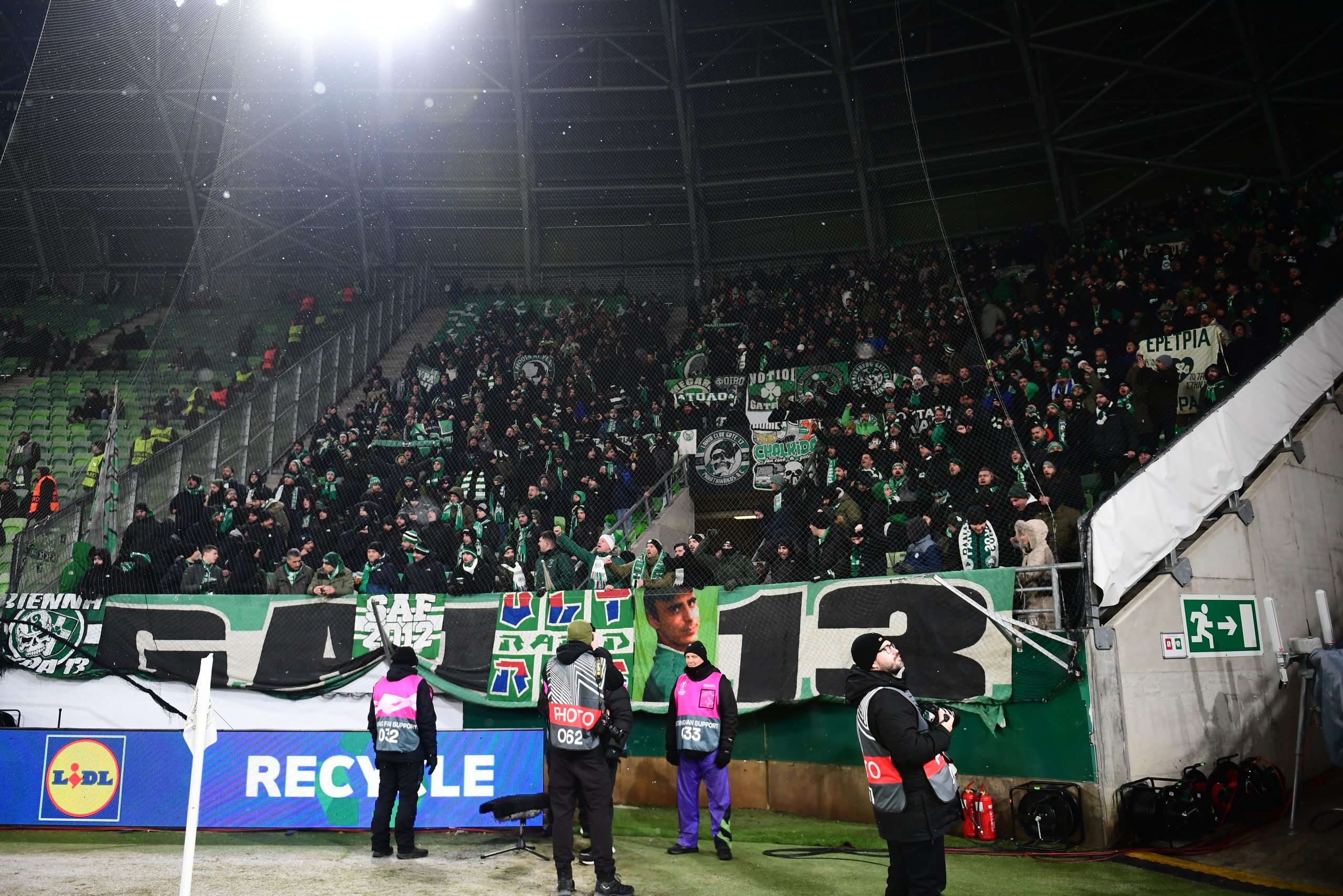
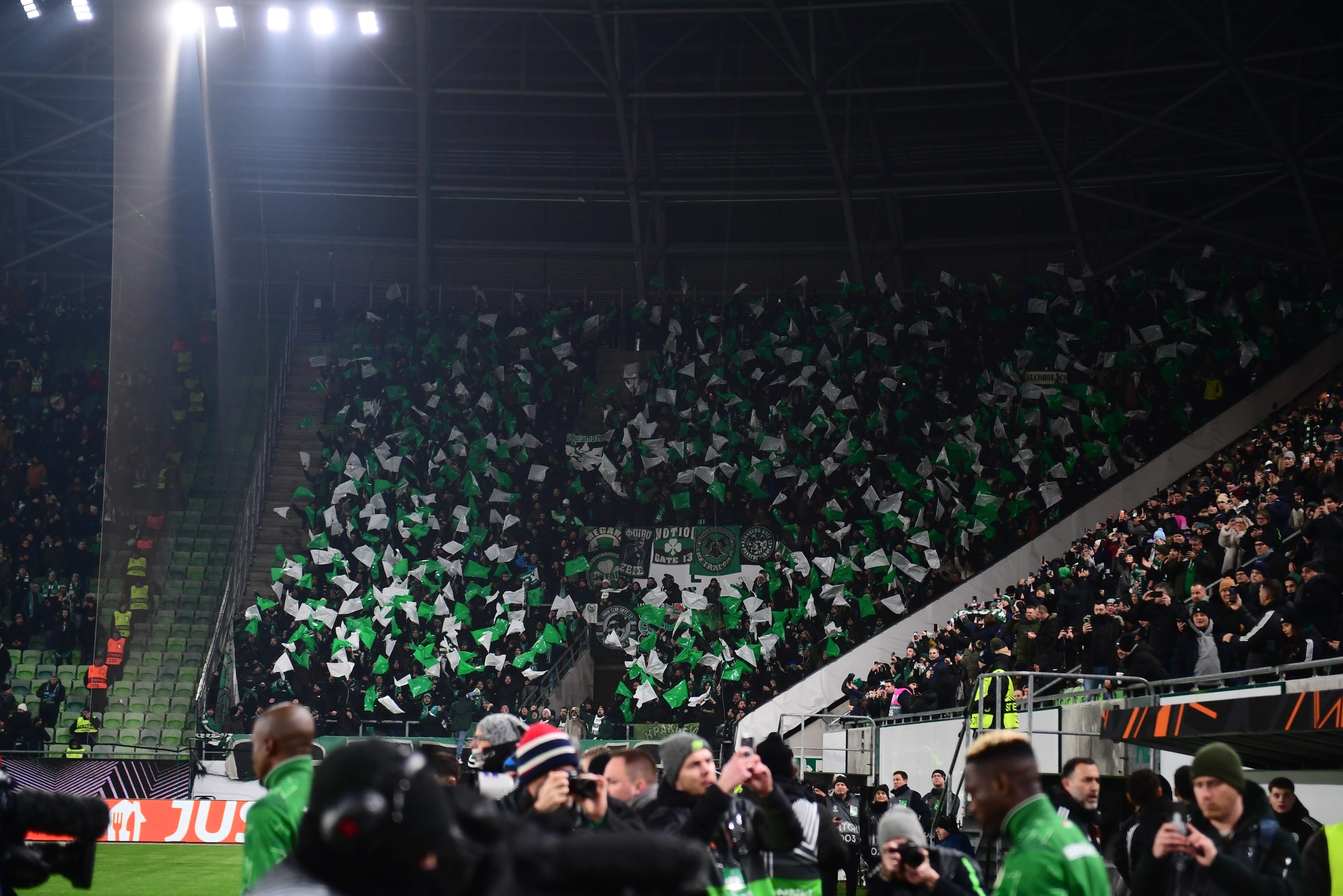
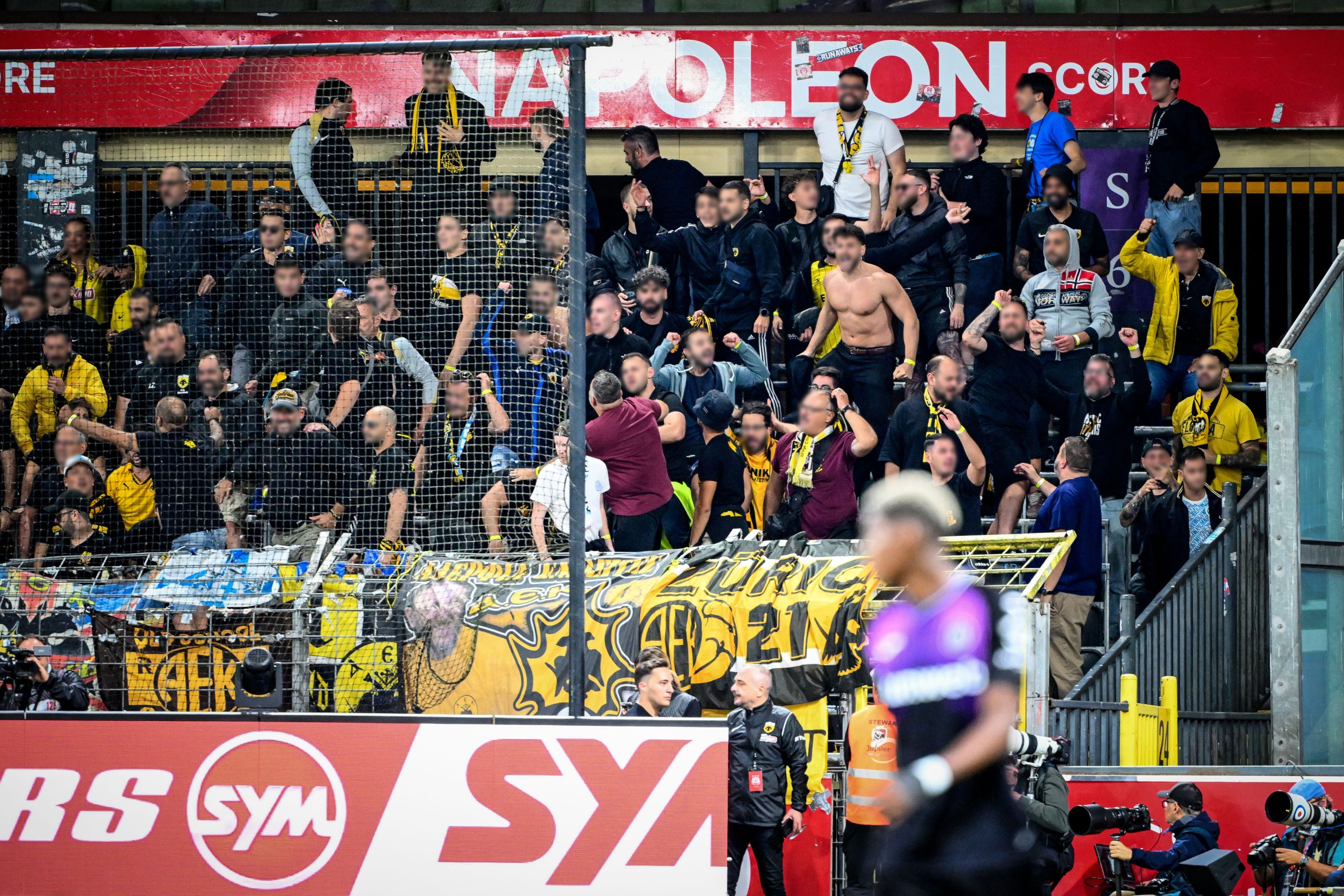
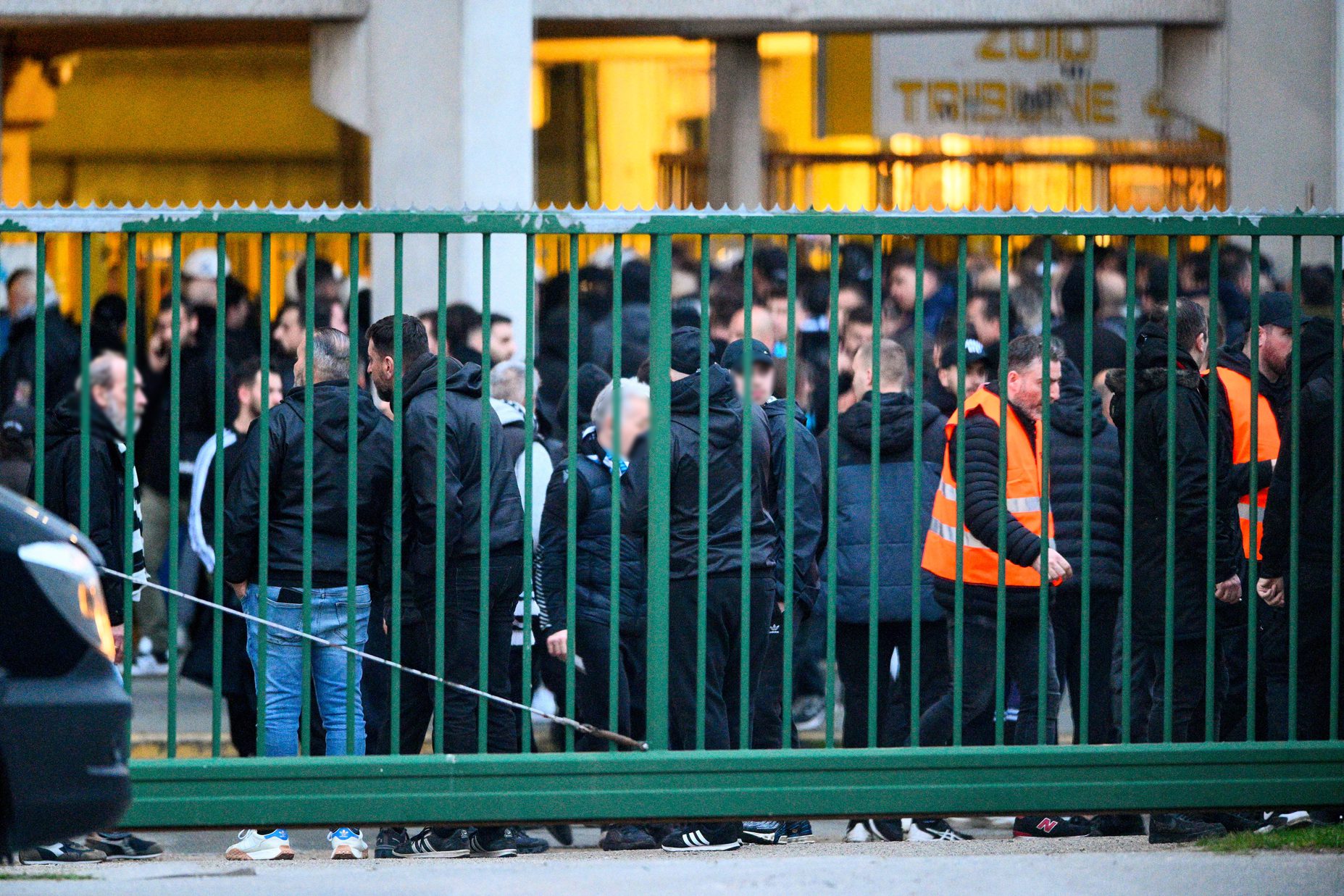
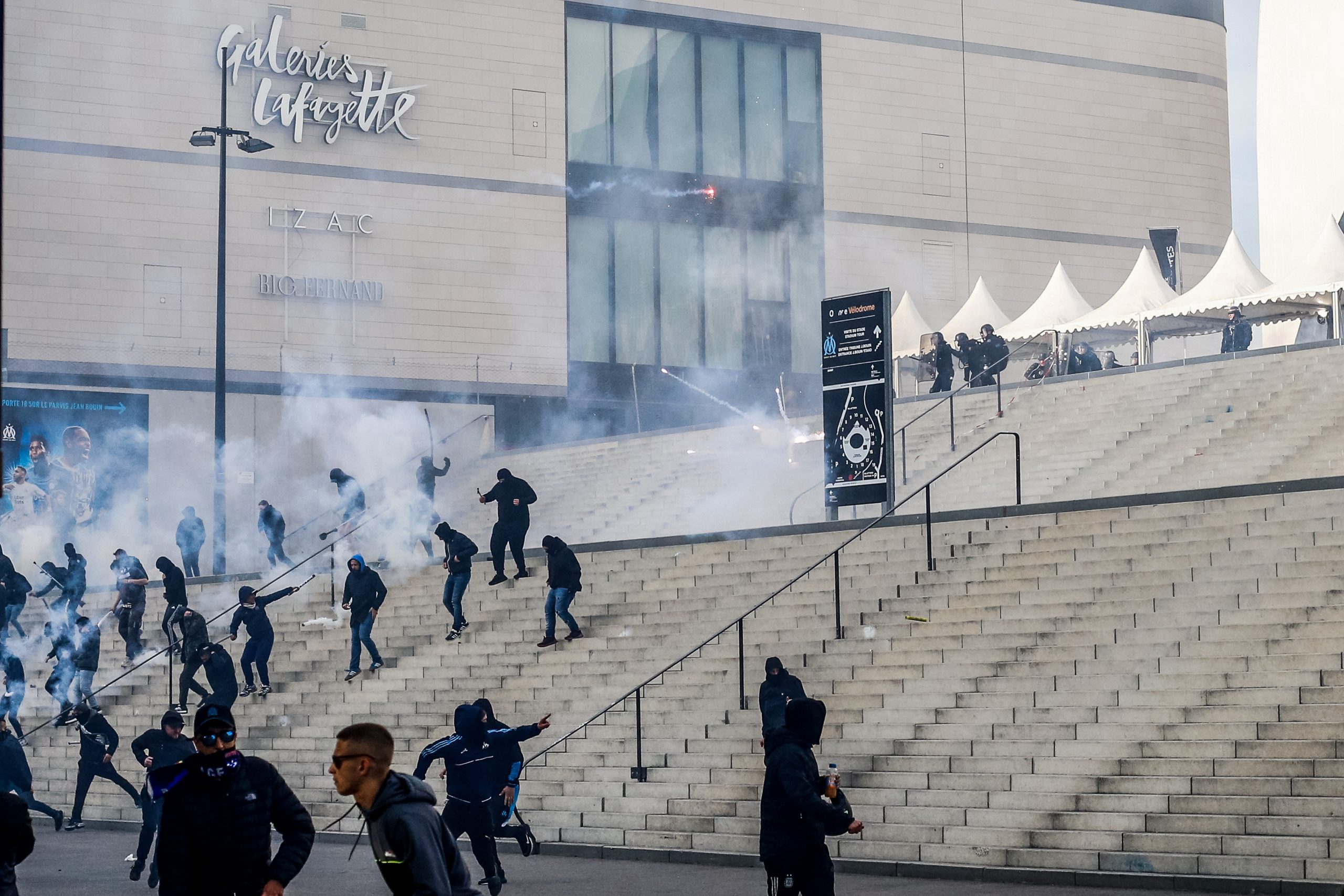
Marseille-PAOK. (EUROKINISSI)

Away days: The dark side of the European matches

Add your Headline Text Here
@fyinews team

13/02/2026

Copy link
fyi:
  1. Away trips to watch your team are once-in-a-lifetime journeys, but for thousands of supporters this experience is painted black by repeated incidents of police brutality and misconduct, putting their safety at risk.
  2. Anastasis Koutsogiannis and Victoras Antonopoulos report—mostly negative— experiences from away trips to Europe, where they are often treated as second-tier citizens.
  3. This report is dedicated to the seven PAOK supporters who lost their lives on their way to watch their team’s match against Lyon in France.

Travelling abroad to support your team is something unique, something special, an experience you’ll always remember. Friends, laughter, teasing, long trips by coach, train or plane, deep-rooted passion for the team, and leaving the stadium with broken voices.

Life trips you will look back on every time you step into a stadium, a treasure chest of stories you will narrate time and again, moments that will bind you forever to the people you shared them with.

That said, there is another side to it.

In recent years, repeated incidents of police brutality and misconduct have put the safety of away fans travelling to support their team at risk.

Supporters complain about heavy, aggressive policing and poor security planning that leads to overcrowding, and too little access to toilets and drinking water.

They also report cage-like away sections, invasive body searches, and the confiscation of items such as banners, flags, cigarettes, lighters -even medication- issues that periodically make headlines across European matches.

Away days: Hungary

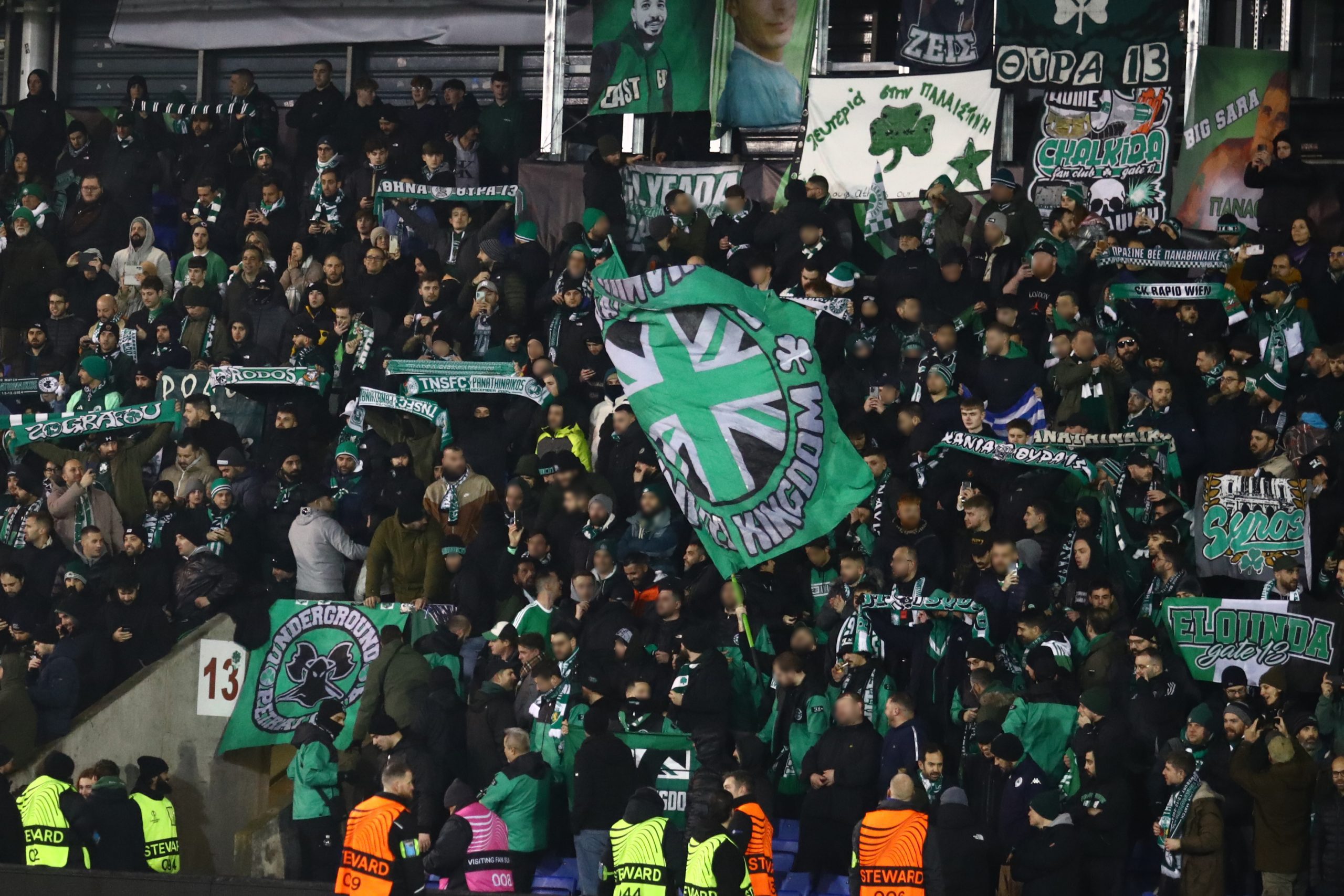
Ferencváros vs Panathinaikos. (DIMITRIS BIRNTACHAS / EUROKINISSI)

‘It doesn’t make sense that the authorities of Budapest, a city which welcomes millions of tourists every year, can’t handle 3,000 people who came to support their team,’ says Thanasis, who recently travelled to Hungary to watch Panathinaikos vs Ferencváros in the Europa League.

Thanasis and other Panathinaikos fans denounce the police and Ferencváros security staff for acting provocatively, leaving thousands to wait for hours in minus-six-degree temperatures before they were allowed into the stadium.

‘They kept us contained at a central point in the city far away from the stadium and we went through body search and tickets control one-by-one,’ he says. ‘Then they crammed us into packed shuttle buses with no heating, and got us there after a long delay’.

After another round of ticket checks and searches (bags, jacket pockets, even shoes), supporters were confined in a space outside the away stand, with no way out.

‘A friend’s ticket wasn’t working and the stewards wouldn’t let us go back to see if we could solve the issue. They kept telling us that it was not allowed to go back from that point. We were literally a few steps further,’ he says. Even though she had a ticket, she never made it to the away stand.

‘We came here to support our team; we are not criminals. They can’t treat us like this’.

Ferencváros vs Panathinaikos. (DIMITRIS BIRNTACHAS / EUROKINISSI)

Hungarian police officers were instructed not to allow Panathinaikos supporters to travel to the stadium individually —a measure typically used for high-risk matches to reduce the possibility of fan clashes. Ferencváros-Panathinaikos was not a high-risk match.

‘There were many cases of people who went to the stadium individually, not aware of the prohibition, as there was no earlier communication. They were sent back to the initial meeting point. Why do that, when there was a second checkpoint outside the stadium anyway?’

‘We came here to support our team; we are not criminals. They can’t treat us like this’, notes Thanasis.

Away days: Belgium

Anderlecht vs AEK (EUROKINISSI)

‘Out of all my away trips, Brussels was the toughest,’ says Panos, an AEK supporter who travelled to Belgium by motorbike last August to watch his team play against Anderlecht in the Europa Conference League play-offs.

The meeting point for away supporters is usually the main square of the city. In Brussels, AEK fans met at Grand Place on matchday morning for beers and chants.

‘When I arrived, I saw a group of 30 or 40 people chanting AEK songs as they across the square. As I went over, a squad rushed in and started herding them into a narrow side street. Within minutes, motorcycles and mounted police had sealed off the area and wouldn’t let anyone near,’ he says.


‘The lads were handcuffed behind their backs under the sun for no reason. I went closer to ask if anyone needed anything, and a police officer pushed me back with his shield, telling me: ‘If you want to see the match, leave. Otherwise, you’ll be watching it from wherever your friends end up’.

On matchday, authorities banned organized groups and groups of more than ten from heading into the city center. Similar bans were imposed on Marseille supporters in Bruges, Tottenham supporters in Rennes, and Juventus supporters in Nice (for the match against Monaco).

As kick-off approached, the police became increasingly aggressive.

The police-designated area for transporting AEK fans to Anderlecht’s stadium was an open lot fenced off with barbed wire outside Heysel Stadium (a venue known for the 1985 crowd disaster).

‘It reminded me of an immigration detention center,’ says Panos. ‘They kept us there for hours, in the heat, without water. They wouldn’t give us any explanation for what they were doing. It created a climate of fear for no reason.’

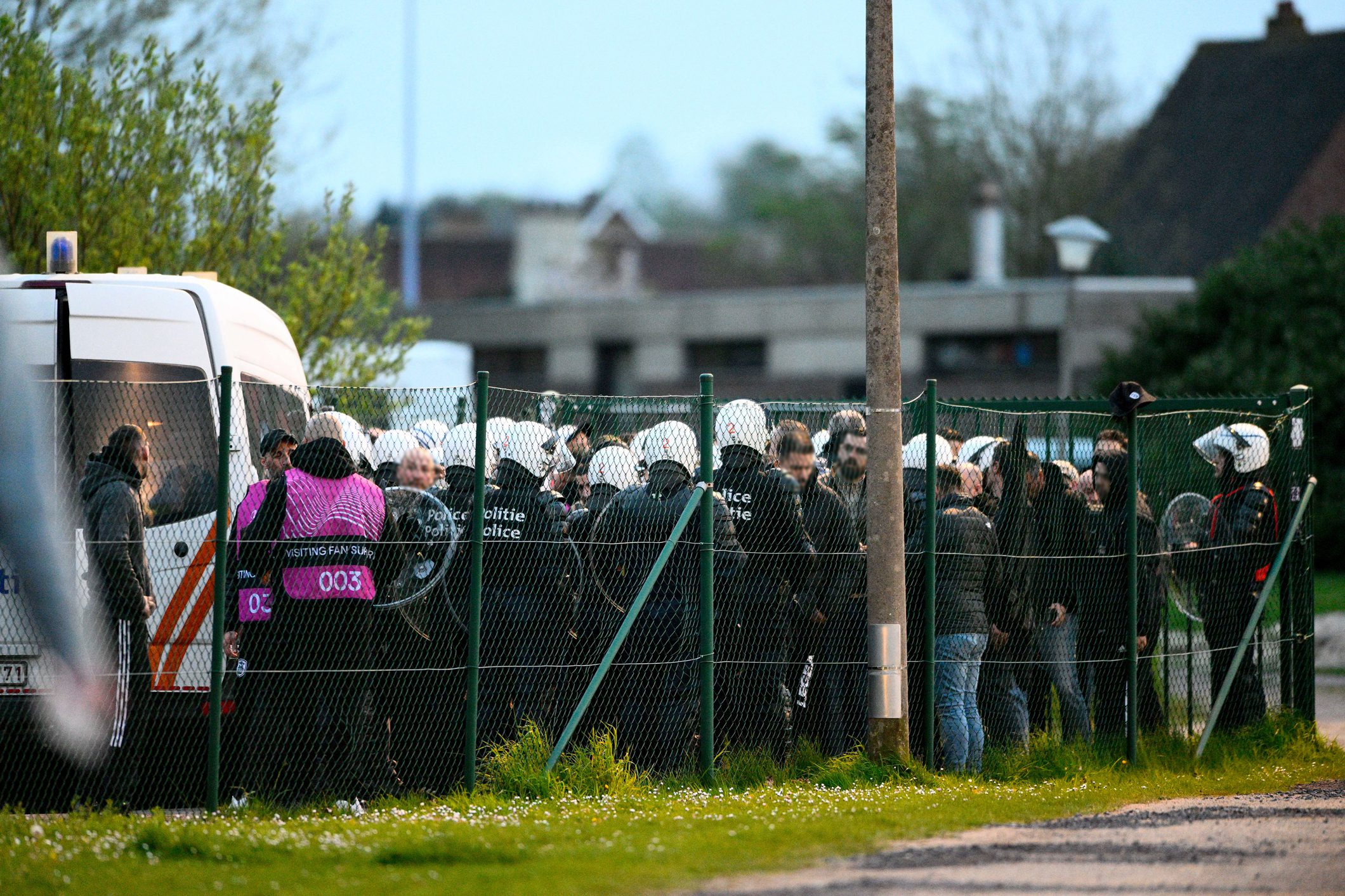
Club Brugge vs PAOK. (EUROKINISSI)

Stefanos had a similar experience —in sub-zero temperatures— when he travelled to Bruges to watch Club Brugge vs PAOK in the 2024 Europa Conference League quarter-finals.

‘We waited for hours in the cold, squeezed into a narrow passage formed by patrol wagons and transport vehicles. Despite the crowds, they were letting us into the stadium one by one,’ he says.

Delays during ID checks, combined with the cold, led to tensions with security staff. The police blasted us with water cannons, when temperatures hovered around 0°C’, says Stefanos.

Chaos followed, with police striking at random. Many ticket-holders never made it to the stadium; Stefanos’ father among them.

‘I was worried about my father and other older people. They’re not used to being treated like this, especially not by European police. We didn’t do anything to provoke them, yet they attacked us. I was outraged, but there was nothing I could do’, he adds.

Away days: France

Marseille vs PAOK. (EUROKINISSI)

Stefanos’ second account comes from an away trip to France in 2022 —an experience that calls police accountability into question in terms of ensuring supporters’ safety during away matches.

The PAOK–Marseille Europa Conference League quarter-finals was classified as high-risk because of the close ties between AEK and Marseille supporters.

‘We already knew we were heading towards a hostile environment and expected a heavy police presence. In the end, we barely saw any officers,’ says Stefanos.

‘The day before the match, we were downtown when police decided to fire tear gas, suddenly and without warning. Our supporters scattered to side streets and ran into armed Marseille fans’.

Those who were there describe terrifying scenes. Marseille fans attacked people indiscriminately. Even PAOK FC issued a formal statement condemning ‘police incompetence’.

‘People ended up in the hospital with stab wounds and broken legs; others were jumping fences, and the police just stood there watching,’ Stefanos says’. ‘They were even pouring hot oil on us from windows,’ he adds.

Despite all that, on matchday PAOK supporters report that they were circled by dense police forces for hours, with no food and no information on how they would be transported to the stadium.

French police instructed the 3,500 PAOK supporters to travel to the stadium individually.

‘We wouldn’t have made it there alive. Marseille fans were waiting for us around the corner’, he adds. In the end, PAOK FC intervened, and we were transported by shuttle buses

‘It was one of the worst experiences of my life. The police were all over the place when it came to restricting us, but nowhere to be found when it came to protecting us,” he concludes.

Away days: Romania

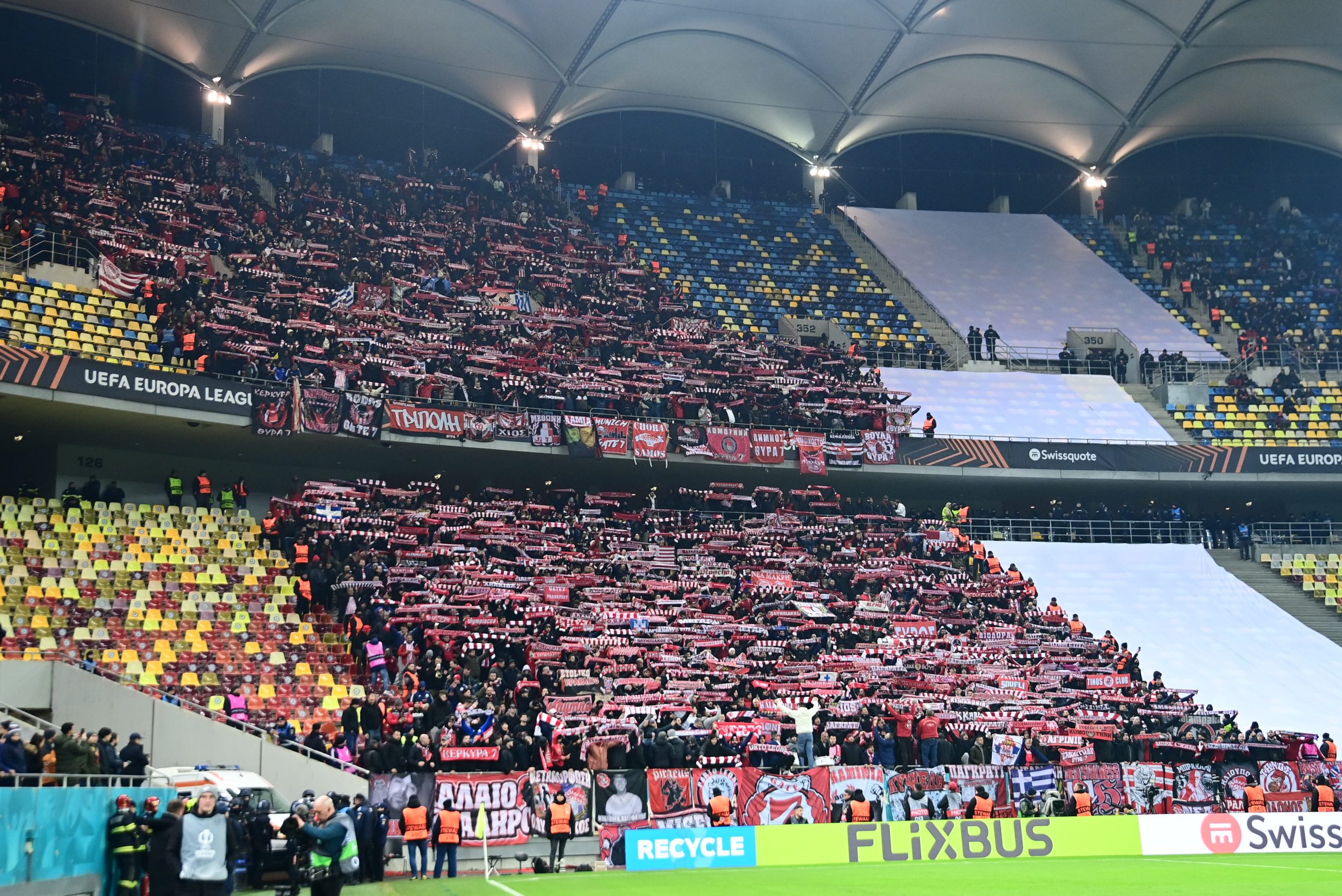
FCSB vs Olympiacos. (GIORGOS MATTHAIOS / EUROKINISSI)

Dimitra has travelled frequently across Europe over the past four years to support Olympiacos. ‘I’m really shocked by the way police treated us in countries where you’d least expect it,’ she says.

The most striking example came during her trip to Bucharest in 2024, when Olympiacos played FCSB (Steaua București), with around 5,000 travelling fans.

‘I expected a warmer welcome from one Balkan people to another. Instead, we were met by the largest police presence I’ve ever seen,’ she recalls.

Policing was extremely dense across the city, and outside the stadium they had set up a very narrow passage leading to the away end. As supporters entered, police pushed them back with shields while filming them as they went.’ ‘I was treated like a hoodie’, she says.

‘It seems they’re somehow trying to wear us out. They want to prevent any potential ‘trouble’ by draining the fans before they even get to the stadium. That’s the only way I can explain it. And it works. By the time we got there, we were so exhausted that we could barely move,’ she concludes.

Away days: Spain

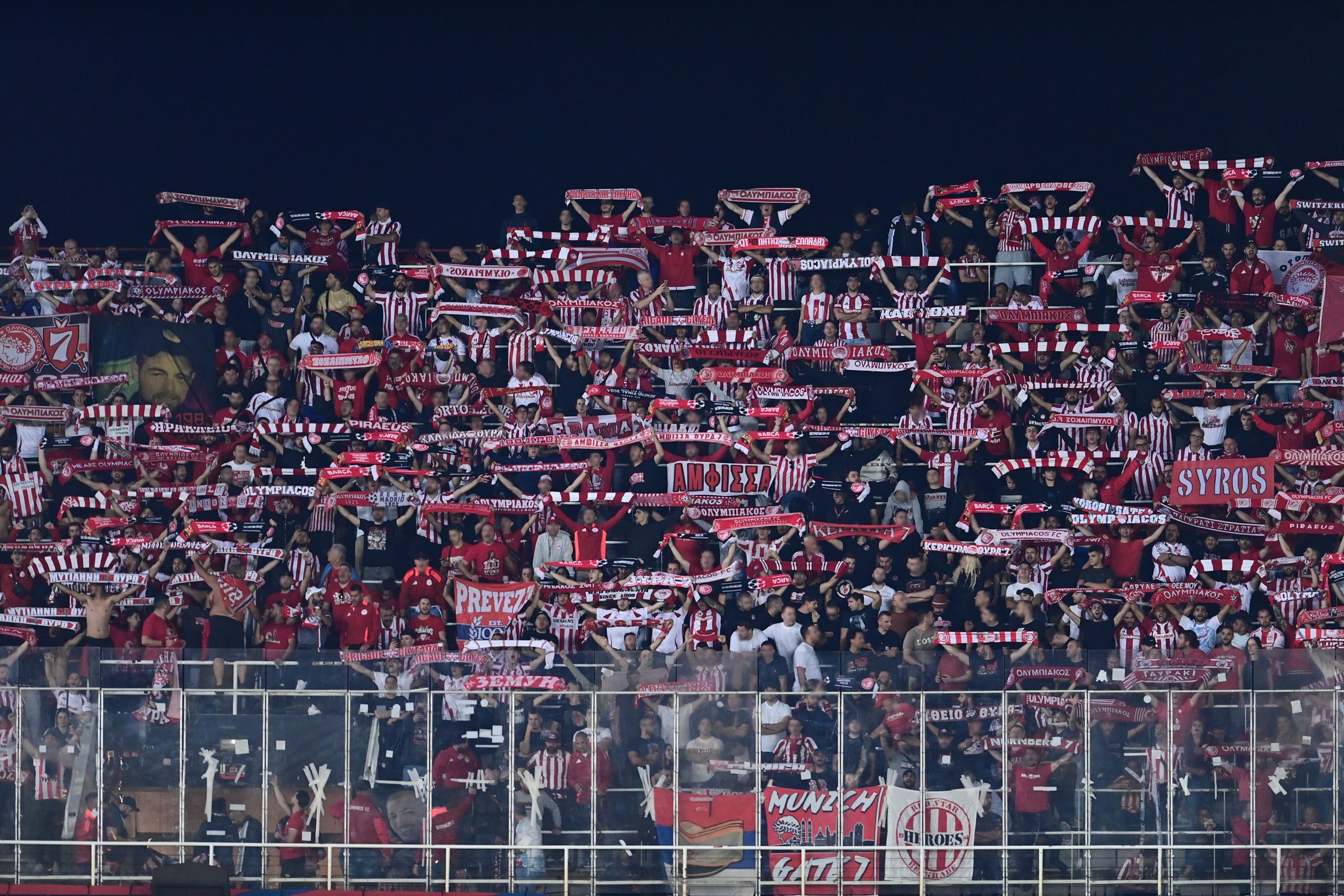
Barcelona vs-Olympiacos. (EUROKINISSI)

Last October, Dimitra travelled to Barcelona to watch her team play Barcelona on matchday three of the Champions League group stage. Olympiacos was supported by more than 3,000 fans.

She says police were barely visible in the city, but stadium entry checks were painstaking.

‘They searched me even in intimate areas, after first confiscating my e-cigarette because, they said, I might throw it during the match.’

‘’I assume that as more women travel on away trips, body search is stricter because they think men give us things to ‘smuggle’ into the stadium,” Dimitra says.

‘But that’s not true. The searches we unreal’.

Away days: Turkey

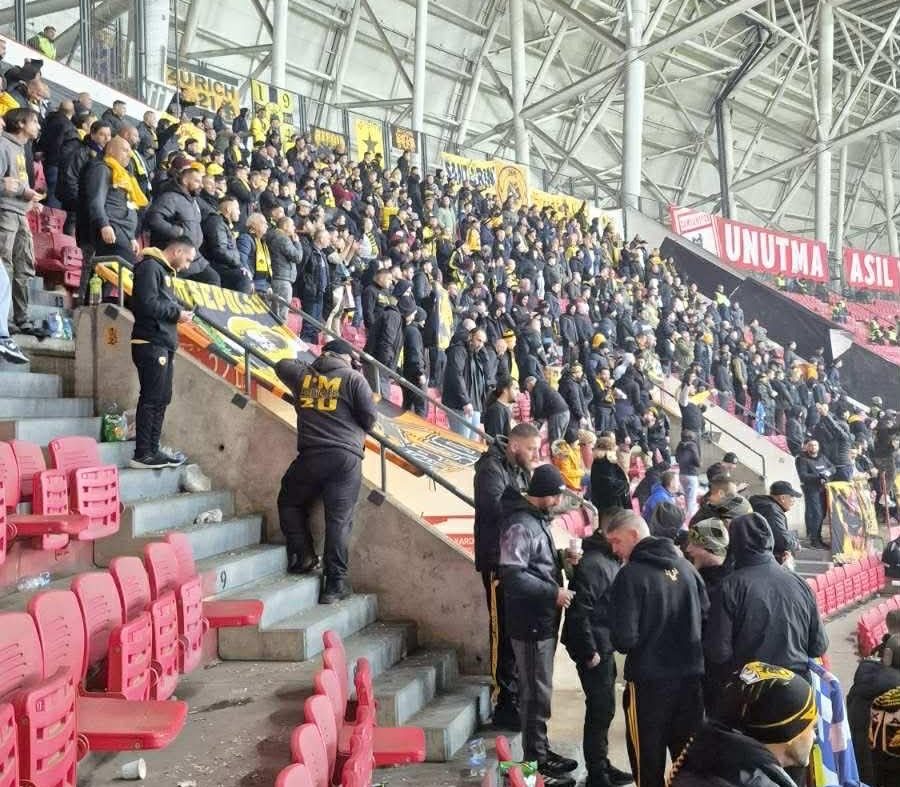
Samsunspor vs ΑΕΚ. (Photo: Courtesy of Panos)

There is a consensus —not only among Greek fans— that security measures at Turkish stadiums are among the strictest, and that police often treat supporters in a humiliating way.

Ahead of the 2023 Champions League final in Istanbul, dozens of Manchester City and Inter supporters reported mistreatment, describing severe overcrowding both inside and outside the stadium. There was also criticism on UEFA, which coordinates security and policing measures with local authorities.

‘We arrived in Istanbul two days before AEK’s played Samsunspor in Samsun’, Panos says. ‘We were walking around near Hagia Sophia -without any colors on- when we lifted our scarves for a souvenir photo’.

‘Police arrived within minutes, grabbed our phones and deleted the photos, saying it was an insult to the monument. They even emptied the recycle bin to make sure we couldn’t recover them.’

‘Would they treat us like this if we weren’t supporters?’, he wonders.

‘In Samsun they took everything we carried on us. We couldn’t bring a single banner into the stadium before they translated it first,’ Panos says.

It took us 20 minutes to explain that “Menidi” is a district of Athens with no political meaning and that it had nothing to do with Greek–Turkish tensions. This was a funny one.’, he says.

‘The cherry on top was when we were not allowed to go to the toilet before kickoff. When we finally convinced them, they would allow us to go with a police escort and with the door open,’ Panos says.

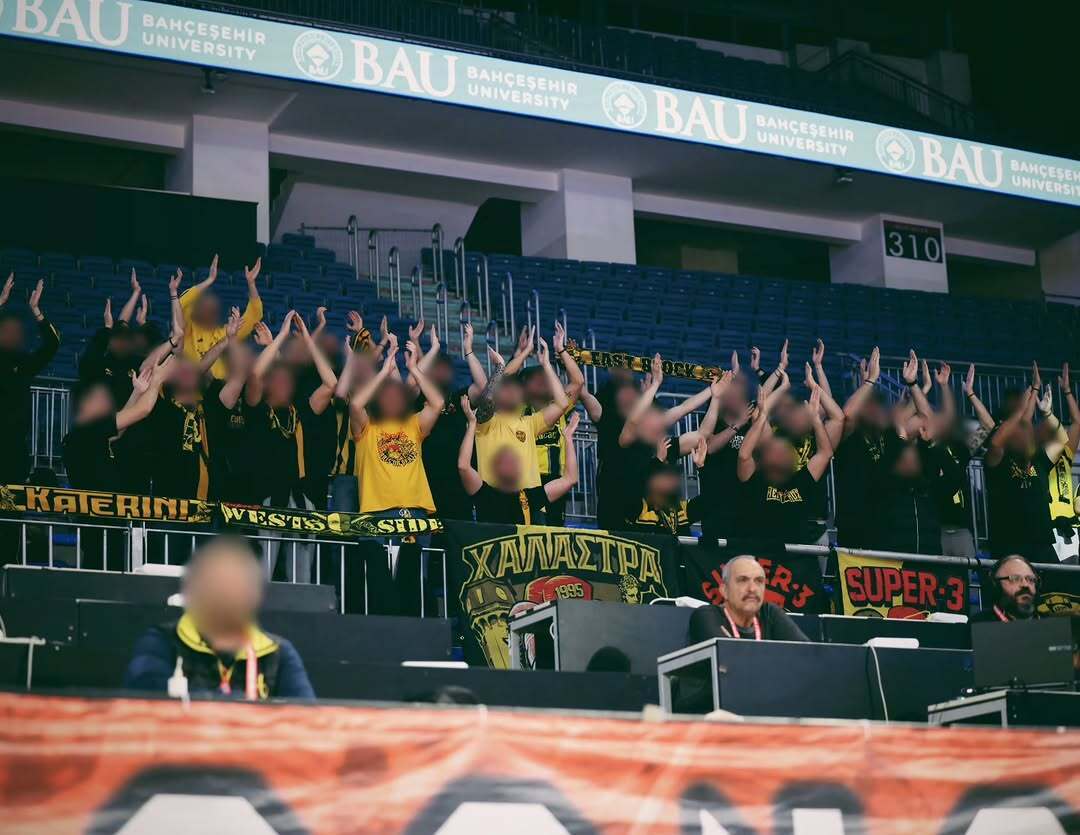
Bahçeşehir vs Aris. (Photo: Courtesy of Giorgos)

Aris supporters had similar treatment. Turkish police searched them thoroughly at the entrance —even for a basketball game, where security is usually lighter and policing less visible.

‘They took all our flags,” says Giorgos, an Aris supporter who travelled by coach to Istanbul to watch the Bahçeşehir-Aris match in the EuroCup.

‘They were not even Greek flags. They were all Aris flags. They even confiscated a banner with a photo of Dimitris Kouvelas [an iconic Aris supporter who died a few months ago] because he was shirtless,’ he concludes.

England as counterexample

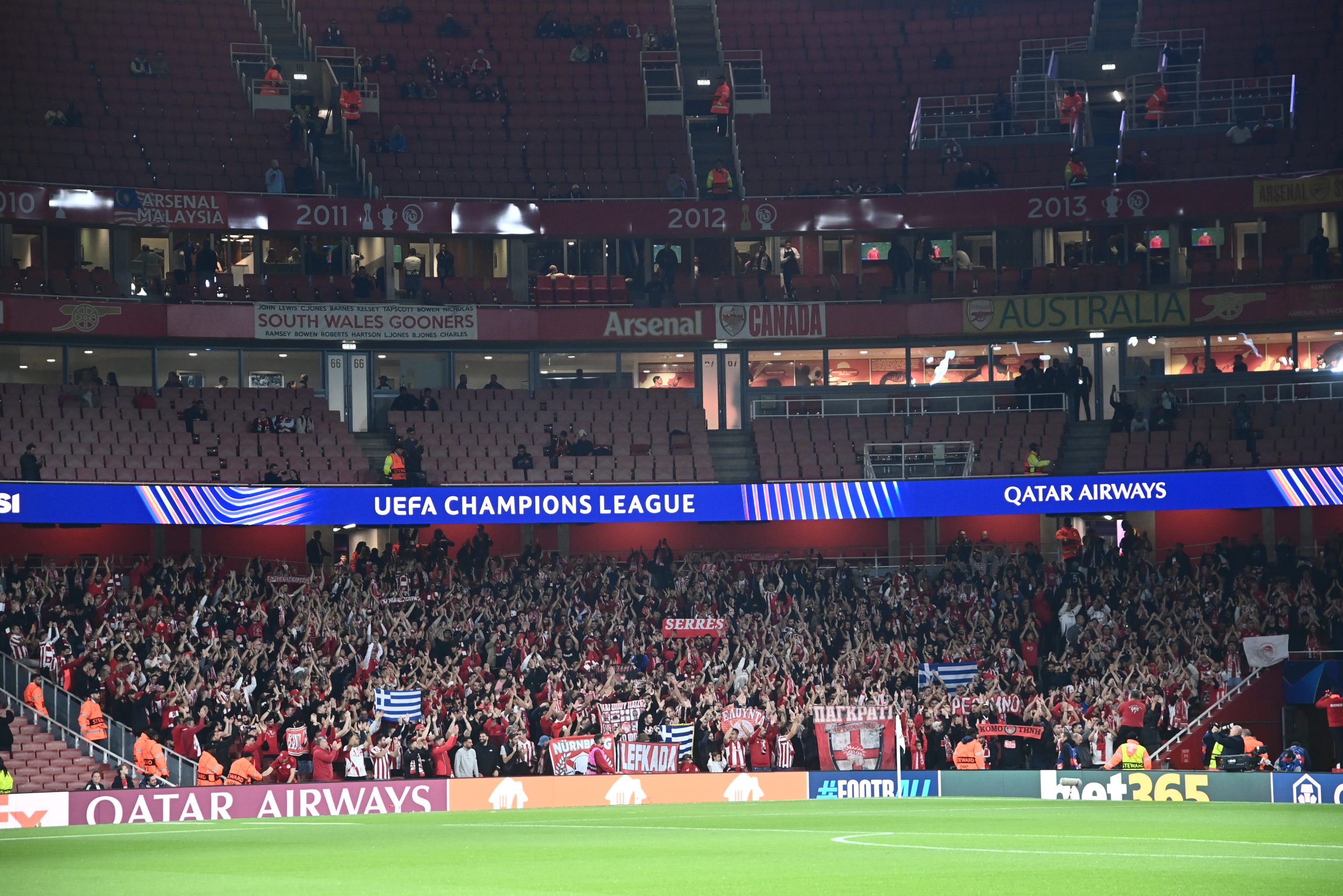
Arsenal-Olympiacos. (EUROKINISSI)

If any country has a deep-rooted away-day culture, that’s England —both domestically and in European competition.

Stefanos, travelled to Manchester in 2024 to watch PAOK play Manchester United in the Europa League, says that police treated fans ‘like human beings.’

‘Some officers were even cheering with us. Football culture is different there. Away travel runs in their veins.  The English are different in these things.’

As long as you don’t do anything stupid. If you do, you won’t get away with it.’

Dimitra agrees that ‘the English are nothing like the rest of Europe.’ ‘I’ve travelled to London twice for Olympiacos matches against West Ham and Arsenal, and the police were exemplary.’

The News Saints vs Panathinaikos. (MARKOS CHOUZOURIS/EUROKINISSI)

Panathinaikos supporters describe similar experiences in Shrewsbury, in December 2024, after travelling more than 1,000 km for their team’s match against Welsh side The New Saints in the Europa Conference League.

Before the match, supporters of both teams stood next to each other, and police were simply giving directions.

‘We had to pass through the opposing supporters to go to the toilet. A risky move in theory. But in England this is very normal and safe,’ Thanasis recalls.

For Stefanos, this kind of policing should be taken as a given. ‘Why should we praise them for doing their job?’ We focus on the negatives because they stand in stark contrast to what the police are meant to do —and what they are instructed by the organization: Ensuring public’s safety,’ he says.

Fans have a voice

Club Brugge vs PAOK. (EUROKINISSI)

As safety conditions have significantly worsened —even at high-profile Champions League fixtures— Football Supporters Europe (FSE), an independent non-profit members’ association of supporters across Europe, has launched an anonymous away fans survey by means of which supporters can provide information on their experiences.

After the information is evaluated, FSE publishes a report based on the findings to liaise with UEFA, the Council of Europe and national federations on possible improvements of hosting conditions.

‘There are definitely countries where the situation is deteriorating, like Germany, Belgium and the Netherlands,’ said Ronan Evain, executive director FSE in BBC

‘There are also repeat offenders – countries and clubs where things are not improving and they have demonstrated that they are not capable of hosting games in acceptable conditions,’ he adds.

‘France, Spain, Portugal and Italy are major tourist destinations that are very used to hosting people from all over the world, but clearly treat football fans completely differently —like a threat or second-tier citizen’.

AD(1024x768)