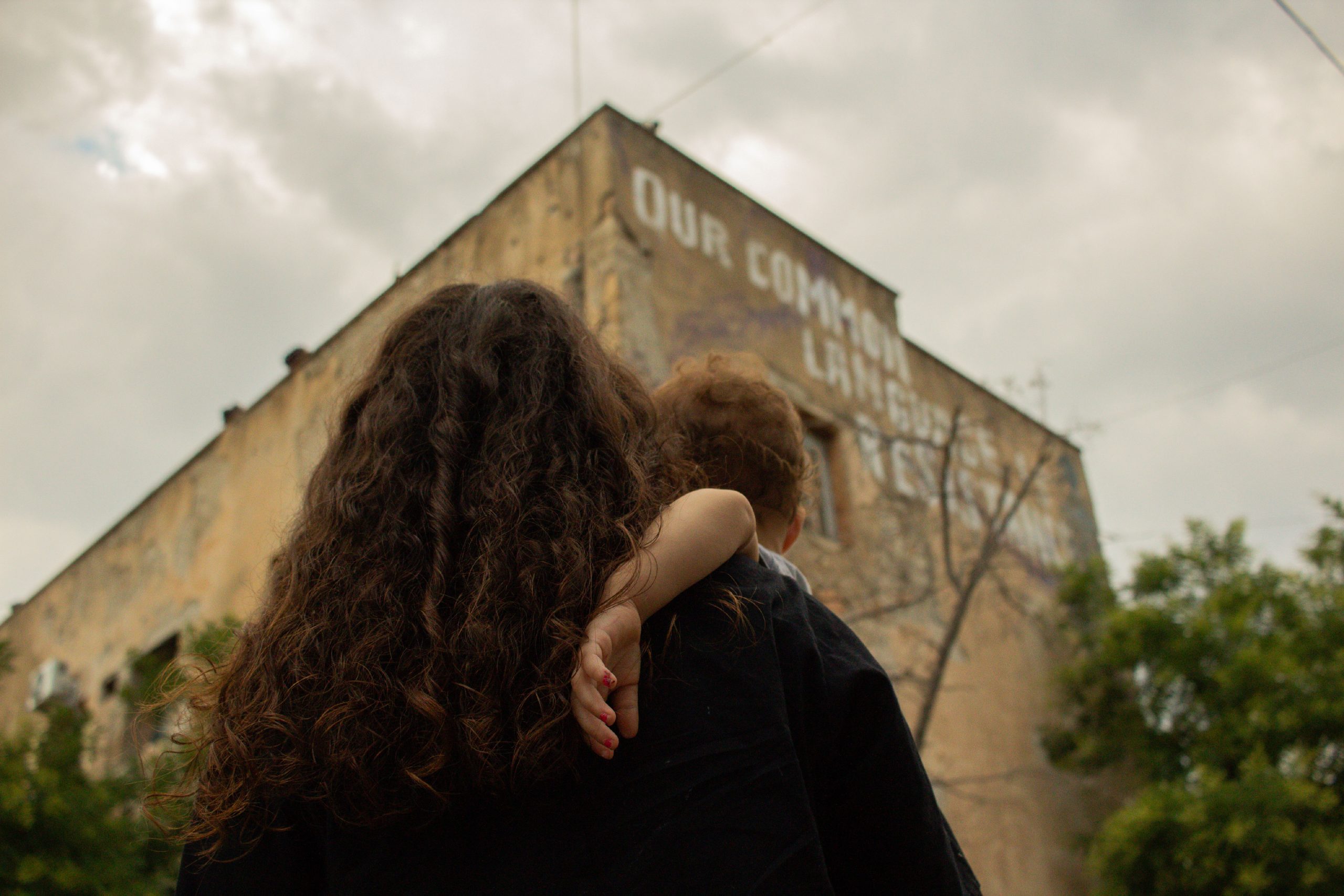
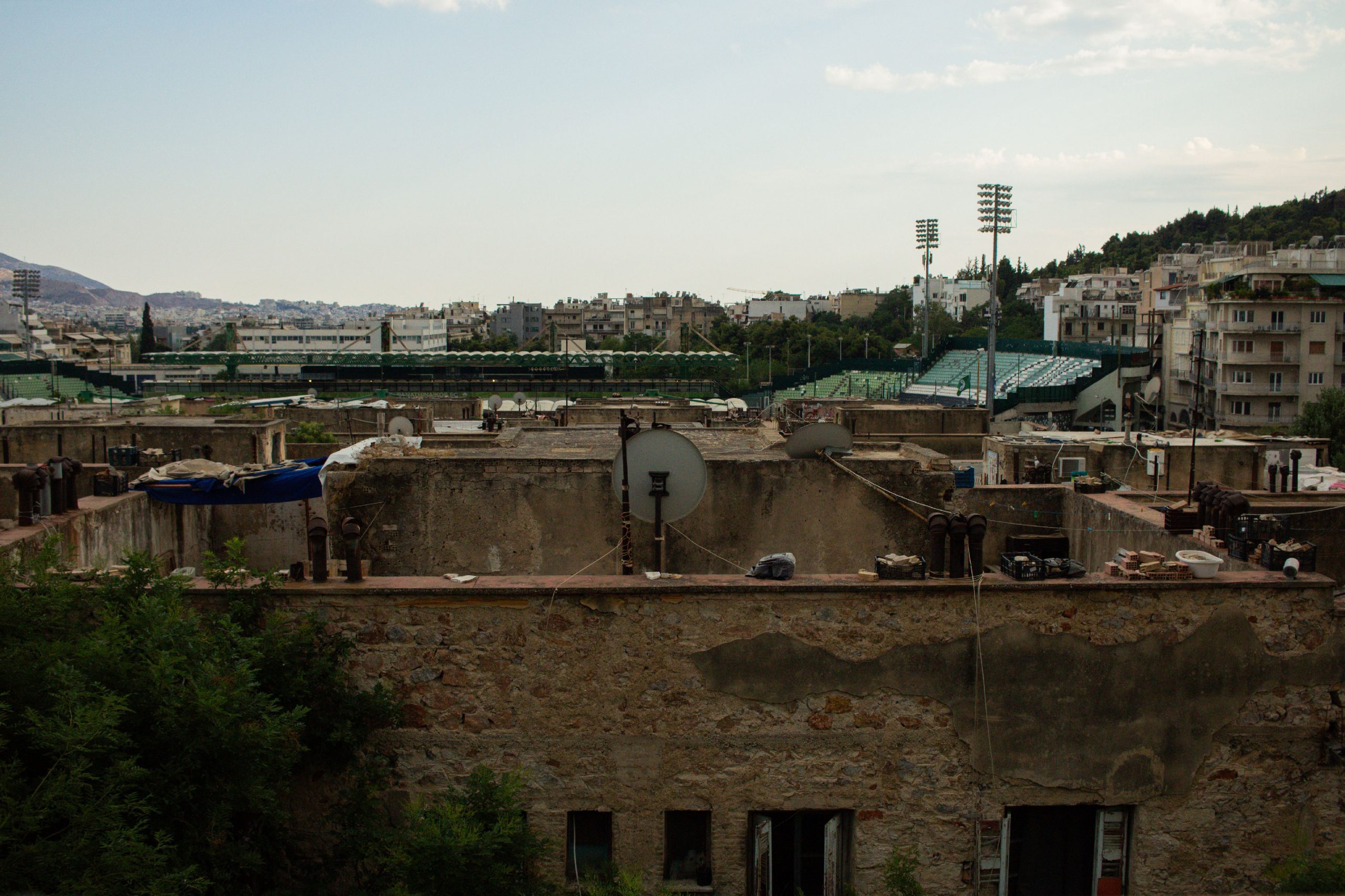
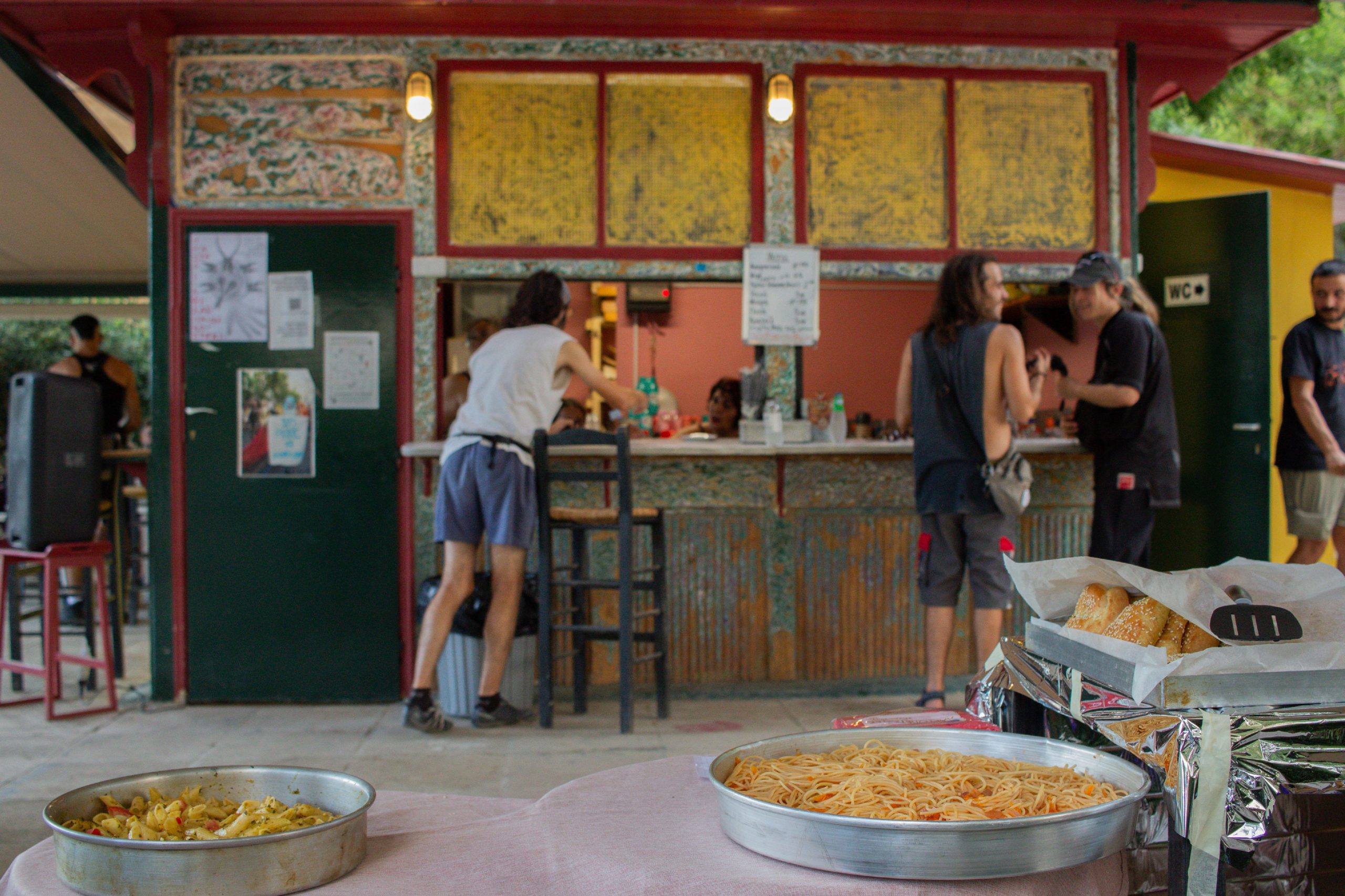
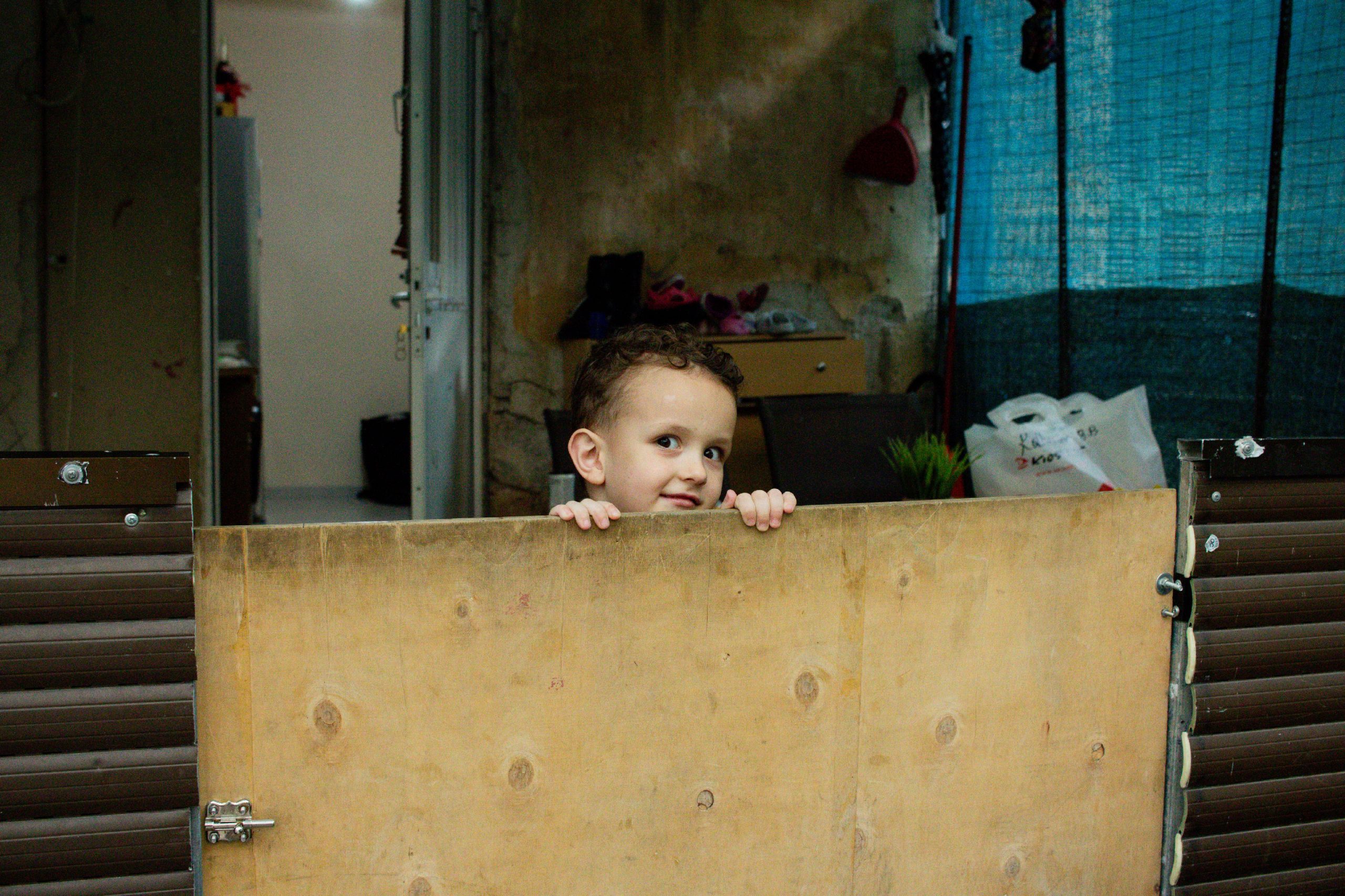
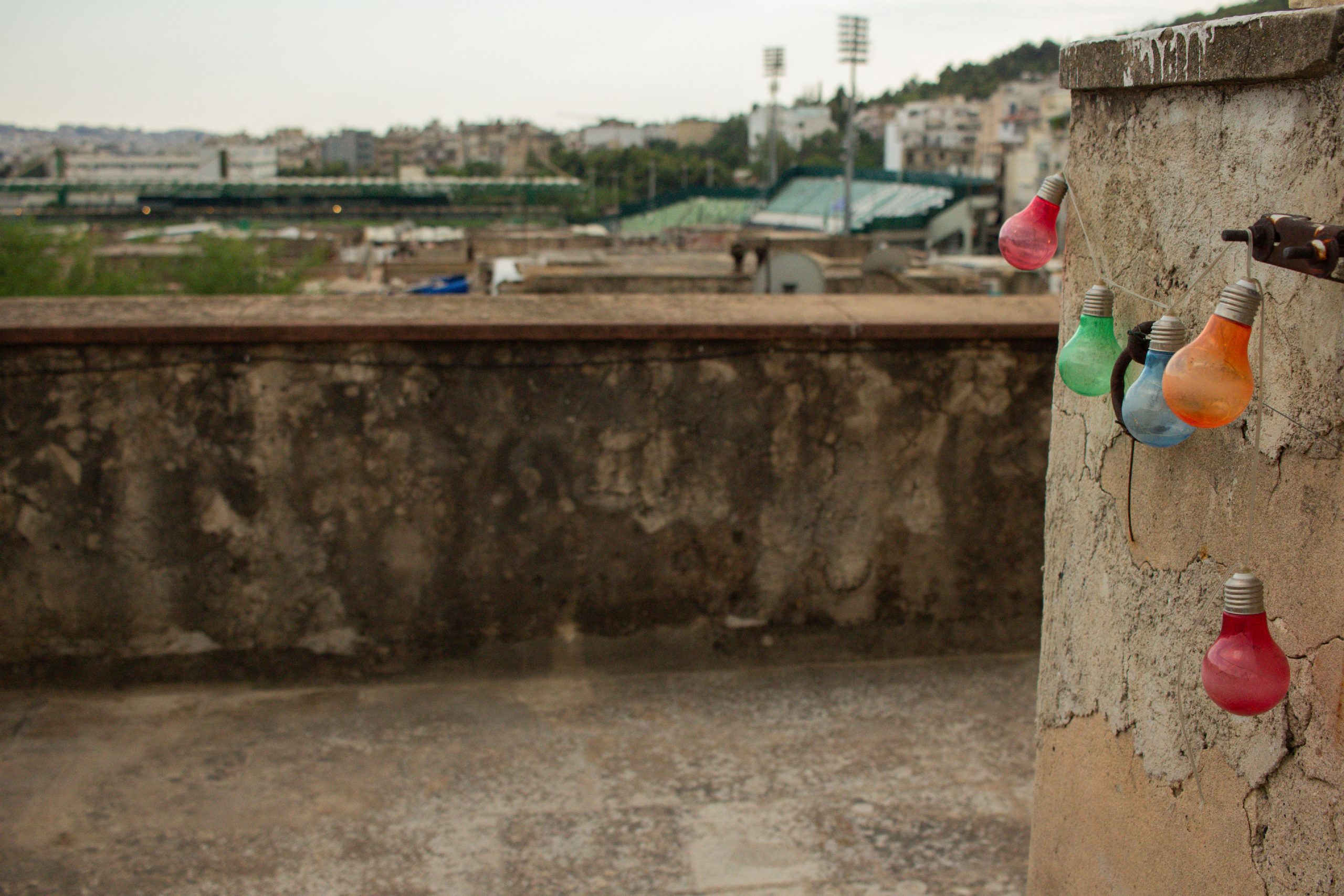
(Photo by Katerina Paspaliari)

Life at the Alexandras Avenue Refugee Housing Complexes – Truths and Lies About the Redevelopment Works

Add your Headline Text Here
@fyinews team

17/07/2026

Copy link
fyi:
  1. The Alexandras Avenue Refugee Housing Complexes are not empty buildings. They are homes. They are a neighbourhood. They are the people who live there, raise children, build community structures and support one another.
  2. At the same time, the Region of Attica is talking about redeveloping and restoring the buildings.
  3. Anastasis Koutsogiannis and Katerina Paspaliari visited the Refugee Housing Complexes, spoke with residents and recorded their stories, their concerns and the questions that remain unanswered.

by Anastasis Koutsogiannis

“This is my home, this is my neighbourhood and these are my people. When I die, I want you to bury me here,” Sylvia says with a laugh, sitting on the sofa in the apartment that houses the Women’s Structure of the Community of the Occupied Refugee Housing Complexes.

She came from Bulgaria in 2003 in search of a better future. Although she struggled greatly at first, she managed to get back on her feet and build a “normal life”. During the years of the severe economic crisis, however, she lost everything and was at risk of ending up on the streets with her husband and their two children.

She first knocked on the Community’s door in May 2016, at an extremely difficult time in her life.

“I had lost my job and had no money for rent. My husband and I were having a very hard time, while one of our children was ill in hospital. We were left without a home, until a friend told me to come here and ask for shelter,” Sylvia recalls.

“At first, I cried all day. I didn’t know anyone. But little by little, we began to open up and meet people from the neighbourhood. They helped me enrol the children in school and took it upon themselves to help them with their studies. I didn’t speak Greek well, so I learned the language alongside them,” she continues.

Sylvia got back on her feet, found work and, together with her husband, is raising their children in a neighbourhood unlike any other.

A neighbourhood where more than 400 people live together harmoniously, including around 50 children, people of Greek origin and people of 27 different nationalities, who for the past 16 years have breathed life into the Alexandras Avenue Refugee Housing buildings, which had been abandoned by the Greek state for decades.

A neighbourhood that operates on the principles of direct democracy, self-organisation, solidarity and mutual aid.

A neighbourhood, however, that is facing the prospect of eviction, as the Region of Attica has announced an incomplete redevelopment plan.

A Brief History

(Photo by Katerina Paspaliari)

The Alexandras Avenue Refugee Housing Complexes were built gradually between 1933 and 1936 to house a small fraction of the approximately 1.5 million refugees displaced by the Asia Minor Catastrophe.

The complex consists of eight apartment blocks and 228 flats, each measuring 50–55 square metres. They are among the most important examples of twentieth-century architecture in Greece, designed in the Bauhaus style, and were built by civil engineer Dimitrios Kyriakos and architect Kimon Laskaris.

The flats—innovative for their time—were purchased on favourable terms by families from Asia Minor and Pontus following a lottery. In 1944, during the Dekemvriana clashes, the complex became a battleground between British and Greek government forces and EAM/ELAS, as evidenced by the bullet marks still visible on the walls. In the years following the Second World War, residents gradually began leaving the refugee apartment blocks.

In the late 1990s, the government announced plans to demolish them. However, the persistence of 51 property owners, together with scientists, architects and others, led to the first two apartment blocks being listed as protected buildings in 2003, followed by the remaining six in 2009.

During those years, under the pressure of compulsory expropriation, some owners sold their flats to the state, while others were eventually expropriated. Of the 228 flats, 177 passed into state ownership and were emptied.

In 2014, the state transferred the flats to the Hellenic Republic Asset Development Fund (HRADF/TAIPED), which in turn handed them over to the Region of Attica in 2016. In 2018, an attempt was launched to repair them through “Anaplasi Athinas”, but it did not proceed.
The plan was completely abandoned between 2019 and 2023 and was revived by the current regional government.

Abandonment, Drugs and Life Once Again

(Photo: Katerina Paspaliari)

Apart from the 51 flats that were either occupied by their owners or rented out, the remaining 177 stood empty and abandoned.

People in need of housing occupied some of them and, in 2010, organised collectively in order to confront their problems together. The most serious of these involved drug dealers, who had turned several flats into drug-production laboratories just one block away from the Attica General Police Directorate.

“After a very long struggle, we managed to drive the drug mafias out,” Valentini, a resident of the Refugee Housing Complexes and a member of the Assembly of the Occupied Refugee Housing Complexes, tells fyi.news. “But you should know that this struggle is not over,” she adds.

ELPIS Hospital, located behind the Refugee Housing Complexes, houses a unit of OKANA, Greece’s Organisation Against Drugs. Mafias frequently attempt to deal drugs outside it.

“This is the only such unit outside which neither drug dealing nor the exploitation of people receiving treatment takes place, because we safeguard the neighbourhood and do not allow the mafias to gain a foothold,” she stresses.

“For people who use substances, the Community has a Health Structure which, in cooperation with 18 Ano services, psychiatrists and psychologists, jointly supports them throughout the process of overcoming addiction,” she explains.

22 Self-Organised Structures

(Photo: Katerina Paspaliari)

The Health Structure is one of 22 self-organised structures currently operating within the Community, largely covering the everyday needs of residents and the wider neighbourhood.

They include the Children’s Space and Self-Education Structure, together with the Self-Organised Nursery and Preschool; the Library Structure; the Cinema Structure; the Food Logistics Structure; the Clothing Structure; the Storage Structure, which contains furniture and appliances; and the Skipping Structure, which collects produce from open-air markets.

There is also the self-organised “Berkin Elvan” bakery, the Technical Works Structure, which maintains and renovates the buildings, and the Homeless Solidarity Group, which uses the Community’s facilities to provide food for dozens of people in central Athens.

In 2019, another highly significant structure was created, playing a crucial role in the operation of the Community’s constitutional framework.

“It was the Women’s Structure, created to empower the women and feminine-identifying people of the neighbourhood and to collectivise, across the entire Community, responsibility for confronting the patriarchal, authoritarian and competitive behaviours that all of us carry, having grown up within the same oppressive system,” explains Evangelia, a resident of the Refugee Housing Complexes and a member of the Assembly.

“We began as a Women’s Café—a gathering of all the women in the neighbourhood so that we could get to know one another. There were many of us, from every corner of the world, and despite our differences we shared many common problems and experiences. This formed the basis of our collectivisation, which later developed, through trust, into comradeship,” she continues.

“Among these 22 structures is one that particularly bothers the Region of Attica,” Valentini says. She explains that the promise to create hostels for people accompanying patients at Agios Savvas Hospital is being used as a Trojan horse, intended to manipulate public sentiment so that the state’s attempted eviction can gain social legitimacy.

“There are already two flats at the Refugee Housing Complexes providing accommodation for patients and the people accompanying them. The residents themselves renovated them, and they operate in cooperation with members of the Agios Savvas Hospital Employees’ Association. They can accommodate up to four families. In fact, the Region’s plan provides accommodation only for accompanying persons, not for the patients themselves,” she adds.

“If the state truly cared about patients and the people accompanying them, it could convert into hostels some of the many properties surrounding the hospital that belong to the Church, which also sits on the hospital’s Board of Directors,” she points out.

Social Housing

(Photo: Katerina Paspaliari)

According to the Region, the objective of redeveloping the Refugee Housing Complexes is to repair and restore all the buildings. In addition to hostels for patients’ relatives and accompanying persons, the buildings will be allocated as social housing to those who are eligible.

“As with the hostels, the Region deliberately conceals the fact that the Refugee Housing Complexes have operated under precisely this model for decades—and that they are, in effect, the only genuine social housing in Greece. People from many vulnerable groups live here: elderly people, patients, homeless people, people experiencing psychological distress, refugees, migrants, single-parent families and children,” Evangelia says.

Although, in a recent video entitled “9 Lies and Truths About the Alexandras Avenue Refugee Housing Complexes”, the Governor of Attica, Nikos Hardalias, spoke of “converting them into social housing”, the wording used on the website espa.gr is different. The website sets out the “Attica 2021–2027” programme in detail, including the €12 million plans for redeveloping the Refugee Housing Complexes.

Under the section “Priority 4C — €12.0 million (ERDF)”, the redevelopment project is described as: “Promoting access to affordable and sustainable housing through the renovation and energy upgrading of the Region’s existing building stock.” A little further down, it states that the buildings will be converted “into modern housing of a social character”.

“The term ‘social housing’ has now been replaced by ‘affordable and sustainable housing of a social character’,” Evangelia points out. “Affordable for whom, and under what terms?” she asks.

“It is clear that the state wants to exploit one of the most valuable pieces of real estate in central Athens,” she says.

The European Commission’s Rebuff

(Photo by Katerina Paspaliari)

For a long time, the Region’s main argument was that the urban redevelopment plan would be financed with millions of euros in European funds.

In early May, Alternate Minister of National Economy Nikos Papathanasis announced the launch of the project to redevelop part of the Refugee Housing complex.

According to his announcement, the project has a total budget of €12 million, and its first phase involves the development and reconstruction of four of the eight refugee apartment blocks owned by the Region of Attica.

The €12 million earmarked for redeveloping the Refugee Housing Complexes is included in the “Attica 2021–2027” programme, whose total public-expenditure budget is €1,590,045,495. Of this, €808,497,748 represents the European Union contribution and €781,547,747 the national contribution.

Under the section “Priority 4C — €12.0 million (ERDF)”, espa.gr attributes the entire €12 million to the European Regional Development Fund (ERDF).

Maria Zacharia, an MEP for Course of Freedom, recently submitted a question to the European Commission concerning the planned financing of the Refugee Housing restoration project through the 2021–2027 NSRF. The Commission’s response, however, undercut the Region’s claims:
“According to the information provided by the Greek authorities, no call for the project’s inclusion in the ‘Attica’ Regional Programme has yet been issued and, consequently, no project file has been submitted to the European Commission for assessment.”

It also noted:

“No project financed by the Cohesion Funds may lead to the segregation, isolation or exclusion of vulnerable groups. On the contrary, housing interventions must serve social inclusion, promote socially mixed communities and fully respect the Charter of Fundamental Rights of the European Union.”

“The Commission not only exposed the lies of the Region and the government, but also made it clear that any European funding must not support actions that contribute to the segregation, isolation or exclusion of vulnerable groups,” Valentini stresses.

The Non-Profit Civil Partnership

(Photo by: Katerina Paspaliari)

While the money from the European Regional Development Fund does not, in practical terms, exist, residents are calling for the restoration works at the Refugee Housing Complexes to be carried out by the non-profit civil partnership named “Residents and Friends of the Alexandras Avenue Refugee Housing Complexes”, at their own expense and without the use of public funds.

“First of all, let us make it clear that the Community is not claiming ownership of the homes. The Community sees itself as a guest in these historic buildings and treats them with respect. After all, they have been kept standing from the inside for all these years through our own responsibility and personal labour, despite the state’s extensive efforts to have them abandoned,” Valentini says.

“However much they may want to present them as dilapidated and on the verge of collapse, they are completely resilient. They have withstood every earthquake to strike Athens in recent decades, thanks both to their exceptional construction and to the work carried out by the Refugee Housing Complexes’ Technical Structure,” Evangelia adds.

The buildings nevertheless clearly require external maintenance.

“A study submitted in 2019 proposed aggressive interventions in the buildings and the conversion of some of them into museums. This would have increased visitor numbers and, consequently, the change of use would have increased the risks to their structural stability,” Valentini continues.

“What we, as a Community, are saying—and what all the architects and civil engineers who have supported the project over the past two or three years agree on—is that maintenance interventions must be gentle, as is appropriate for modern historic monuments. The work that needs to be done can be carried out by us, with far less money and through our own labour,” she says.

The Hunger Strike

(Photo by Katerina Paspaliari)

Faced with the threat of the neighbourhood’s immediate eviction, Refugee Housing resident Aristotelis Hantzīs began a hunger strike on 5 February 2026 with three demands: the immediate cancellation of the agreement; the right of all residents to remain at the Refugee Housing Complexes; and guarantees that the restoration would be carried out by the non-profit civil partnership rather than by the state.

On 1 May, Suzon Dopan, also a resident of the Refugee Housing Complexes, announced that she too was joining the hunger strike.

On 24 June, a resolution by the Municipality of Athens called on the Region to “halt the implementation of the agreement” and on the Refugee Housing Community to suspend the hunger strikes. The Community accepted the appeal, and the two residents ended their hunger strikes.

Following his prolonged hunger strike of 140 days, Aristotelis Hantzīs remains hospitalised in an extremely critical condition in the intensive care unit of Evangelismos Hospital, with his life hanging by a thread.

“Aristos’s strike is what gave the Community such high visibility,” Valentini says. “Within three weeks of its beginning, we held our first march, with more than 5,000 people, and many more have taken place since then,” she continues.

“This cycle of struggle ended in victory, together with the end of Aristos’s hunger strike,” Evangelia adds.

“The victory is not only that the Community became known in Greece and abroad, but also the sheer number of people who rallied around our struggle, proving that another world is a reality,” she stresses.

“We managed to overturn the Region’s narrative that the homes were empty. That was what their programme agreement claimed. We proved that the Refugee Housing Complexes are not merely inhabited, but are home to a Community that carries out enormously important work—and whose people are prepared to defend it even with their own lives,” Evangelia concludes.

The Community of the Occupied Refugee Housing Complexes has intervened four times at meetings of the Regional Council and has submitted two officially registered requests to the Region of Attica, asking for the issue of the Refugee Housing Complexes to be discussed as an item on the agenda.

To date, it has received no written response.

[The Region of Attica did not respond to any of the questions we submitted as part of this report.]


1/27
AD(1024x768)